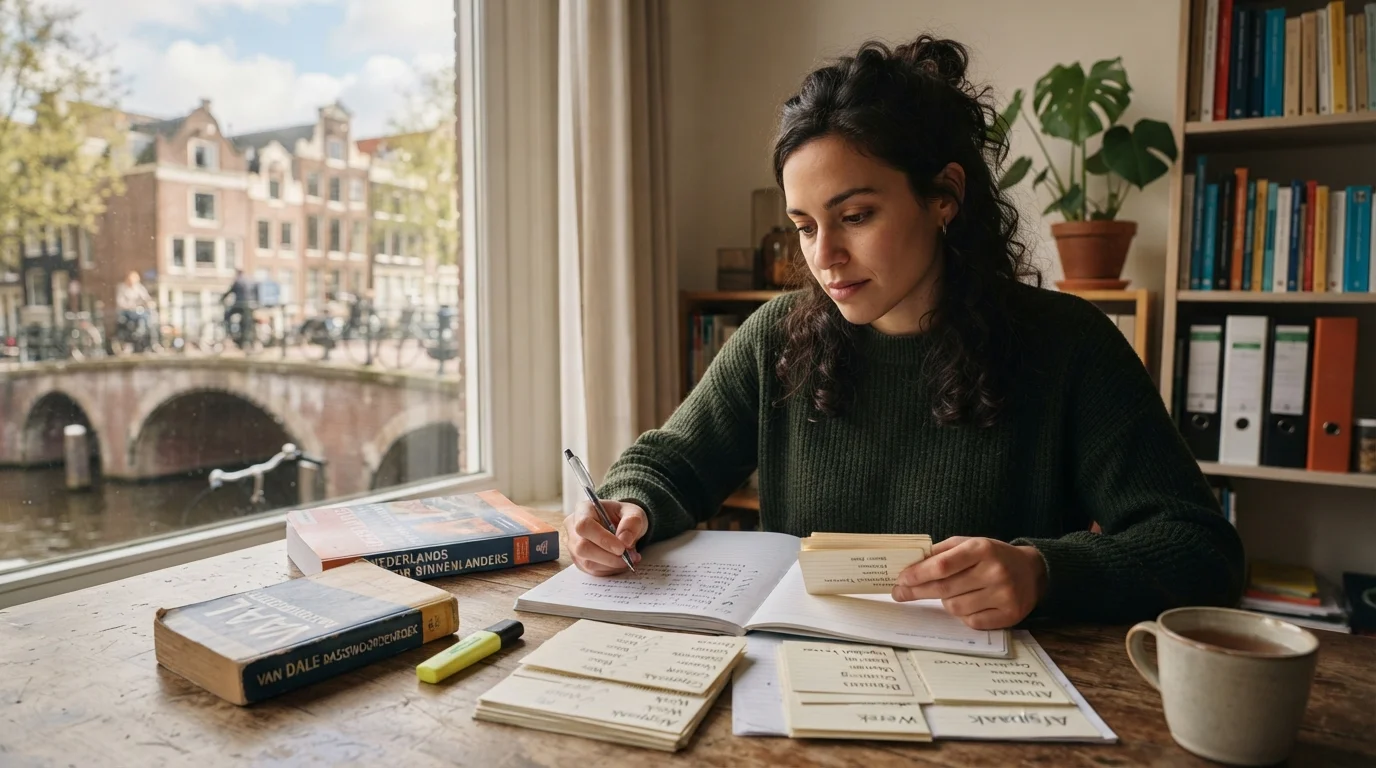
How to Use StroopTaal to Build B1 Dutch Exam Vocabulary
Preparing for the Dutch civic integration exam (Inburgeringsexamen) at the B1 level is a major milestone for expats, immigrants, and long-term...
Read more
This article was drafted by AI and edited by a person before it was published.
AI can get things wrong. For anything official, check the source it points to.
AI-generated image
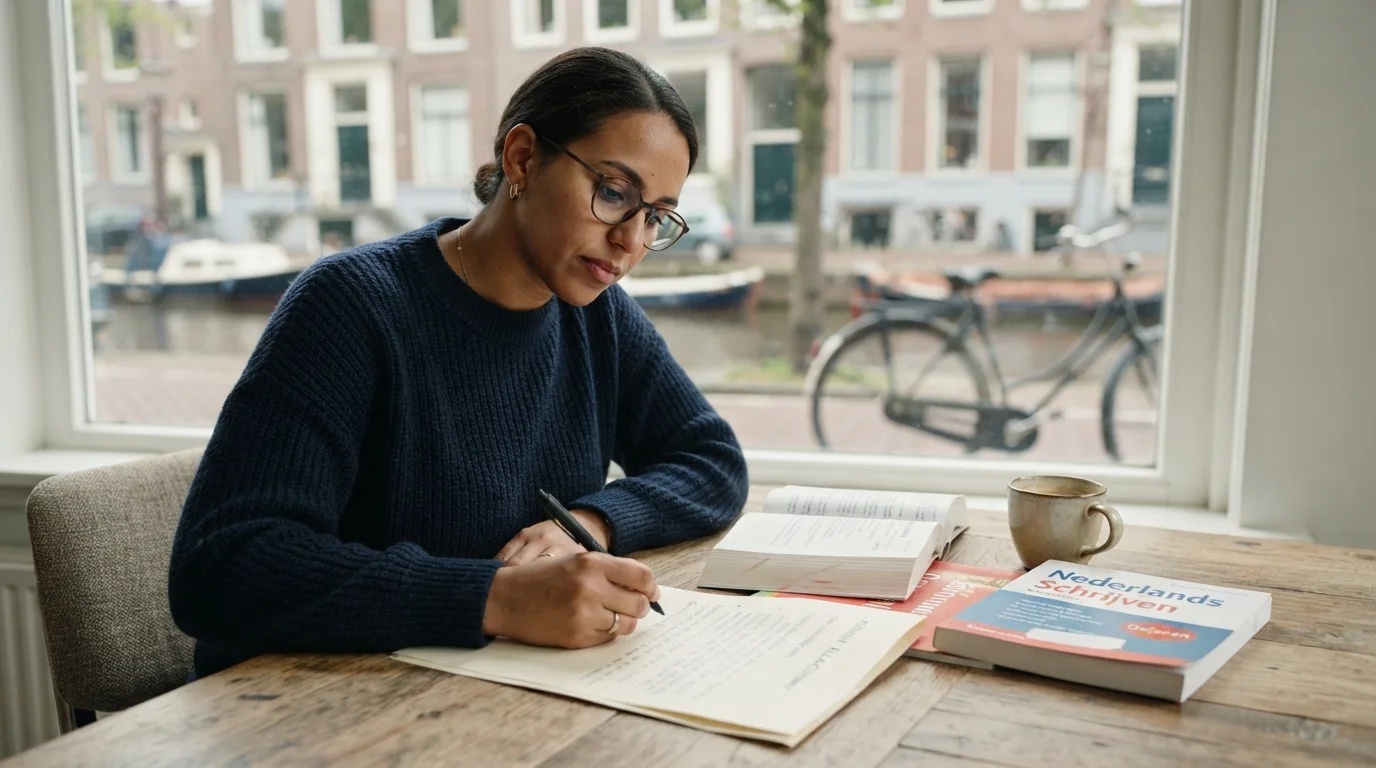
Facing the Dutch civic integration exam (Inburgeringsexamen) can feel like a daunting milestone in your journey as an expat or resident in the Netherlands. Among the various modules, the writing exam (Schrijven) often sparks the most anxiety. Candidates must demonstrate not only accurate grammar and vocabulary, but also a firm grasp of Dutch formal writing etiquette. One of the most frequently tested formats in the writing exam is the formal complaint letter (klachtenbrief).
Whether you are complaining about a damaged delivery package, an unexpected utility bill, or poor service at a local facility, knowing how to structure a polite yet assertive Dutch letter is essential to passing the test. In this detailed guide, we will break down the exact step-by-step structure, key vocabulary, grammatical nuances, and common pitfalls to help you write a flawless formal complaint letter for your Inburgering exam.
The writing module tests your practical writing abilities at either the A2 or B1 language level (depending on your specific integration route). During the exam, you are typically presented with 4 to 6 short tasks, ranging from filling out forms and writing short messages to composing formal letters and emails.
When given a formal writing task, the exam prompt will provide a clear scenario and a list of specific bullet points (bullet points or aandachtspunten) that you must address in your text. Scoring examiners look closely at three main criteria:
Just as structuring your responses in the speaking exam relies on clear frameworks, mastering the formal writing module requires a repeatable formula that you can apply to any prompt.
A standard Dutch formal letter follows a strict structural template. Memorizing this layout ensures you automatically fulfill formatting expectations before the examiner even reads your content.
While online exam interfaces sometimes pre-fill address fields, knowing the traditional format ensures you are never caught off guard. Place your details first, followed by the recipient's details:
Your Details (Afzender):
[Uw Naam]
[Straatnaam en Huisnummer]
[Postcode en Woonplaats]
Recipient Details (Geadresseerde):
[Naam Bedrijf / Organisatie]
[Straatnaam en Huisnummer]
[Postcode en Woonplaats]
Always write the city where you are located followed by the date written in Dutch format (Day Month Year). Note that month names in Dutch are lowercased unless they start a sentence!
Example: Amsterdam, 14 maart 2026
The subject line provides a concise summary of the letter's purpose. Keep it brief and start with Onderwerp:
Examples:
• Onderwerp: Klacht over beschadigde bestelling (Bestelnummer #12345)
• Onderwerp: Klacht over slechte service op 10 februari
Choosing the correct salutation is crucial for establishing a polite, formal register. If you do not know the recipient's name, use the standard neutral greeting:
Note: Avoid starting a formal letter with Beste unless you have previously communicated with the person and wish to maintain a semi-formal tone. For exam purposes, Geachte is the safest choice.
Divide the body of your letter into three clear logical sections:
Conclude your letter with a polite standard phrase that signals you are awaiting action.
Examples:
• Ik zie uw reactie met belangstelling tegemoet.
• In afwachting van uw snelle reactie.
• Ik hoop op een snelle en passende oplossing.
End the letter with a formal closing phrase followed by your full name on the next line:
Met vriendelijke groet,
[Uw Voornaam en Achternaam]
To score high points in vocabulary and style, substitute basic language with formal phrases commonly used in professional Dutch correspondence. Here is a curated list of essential phrases categorized by function:
Let's look at a realistic scenario that reflects actual prompts from the official test platform hosted by DUO (Dienst Uitvoering Onderwijs).
Opdracht: U heeft twee weken geleden een nieuwe laptop gekocht bij een online winkel (TechWorld). Toen het pakket aankwam, was het scherm gebroken. U heeft de klantenservice gebeld, maar zij helpen u niet. Schrijf een formele klachtenbrief naar TechWorld.
In uw brief moet u het volgende vermelden:
Below is an exemplary response written in clear, correct, and formal Dutch:
TechWorld
Postbus 456
1000 AA Amsterdam
Utrecht, 14 maart 2026
Onderwerp: Klacht over beschadigde laptop (Bestelnummer #88391)
Geachte heer, mevrouw,
Op 1 maart 2026 heb ik bij uw webwinkel een nieuwe laptop gekocht (type CX-200) met bestelnummer #88391. Ik heb hiervoor een bedrag van € 650,- betaald.
Helaas ontving ik het pakket twee dagen later in slechte staat. Toen ik de doos opende, zag ik dat het scherm van de laptop volledig gebroken was. Het apparaat werkt daardoor helemaal niet.
Ik heb direct telefonisch contact opgenomen met uw klantenservice. De medewerker die ik sprak, wilde mij echter niet helpen en verwees mij door naar de fabrikant. Aangezien ik de laptop bij TechWorld heb gekocht, bent u verantwoordelijk voor de levering van een goed werkend product.
Vanwege deze situatie verzoek ik u vriendelijk om mij binnen twee weken een nieuw, onbeschadigd exemplaar te sturen. Mocht dit niet mogelijk zijn, dan wil ik graag dat u het volledige aankoopbedrag van € 650,- terugstort op mijn bankrekening.
Ik zie uw reactie binnen 14 dagen met belangstelling tegemoet.
Met vriendelijke groet,
Anna Kowalski
Dorpsstraat 12
3511 AB Utrecht
Understanding why a sample letter works helps you duplicate success under exam pressure:
Many test-takers lose unnecessary points due to recurring mistakes. Keep these critical guidelines in mind while reviewing your draft during practice sessions:
One of the easiest ways to fail the register requirement is mixing u and je. Stick strictly to formal pronouns in complaint letters:
When connecting sentences using conjunctions such as omdat (because), omdat, hoewel (although), or aangezien (since), remember that all conjugated verbs must shift to the very end of the clause.
Example:
• Incorrect: Ik ben boos omdat de laptop is gebroken.
• Correct: Ik ben boos omdat de laptop gebroken is.
Before submitting your exam text, count the prompt points on your fingers and verify that each point has a corresponding sentence in your response. Even if your Dutch grammar is flawless, omitting a bullet point guarantees point deductions.
If you are managing tight study timelines alongside work or family obligations, you might also consider extending your integration deadline to ensure you have ample preparation time.
Writing formal Dutch letters requires consistent practice and immediate feedback to eliminate recurring mistakes before test day. This is where StroopTaal becomes your personal, AI-powered study companion.
With StroopTaal's tailored exam preparation features, you can:
By integrating writing practice into your daily routine—alongside passing the B1 reading exam and polishing your spoken Dutch—you will walk into the DUO exam center with supreme confidence.
Writing a complaint letter for the Dutch integration exam is not about showcasing overly complex literature; it is about clear, structured, and polite communication. To ensure high marks on your exam day, keep this quick reference checklist in mind:
Start practicing today! Download StroopTaal to access interactive writing prompts, track your streak, and practice each part of the exam on its own with a timer.
Share this article:
Preparing for the Dutch civic integration exam (Inburgeringsexamen) at the B1 level is a major milestone for expats, immigrants, and long-term...
Read moreMastering the KNM Exam: Why Vocabulary is Your Secret Weapon Preparing for the Inburgeringsexamen (Dutch Civic Integration Exam) can feel...
Read moreRelocating to the Netherlands brings a wave of exciting changes: cycling through historic streets, discovering local traditions, and mastering the...
Read more