
Business Dutch Vocabulary: 20 Phrases for Office Meetings
Stepping into your first office meeting in the Netherlands can feel both exciting and intimidating. Even if your company operates primarily in...
Read more
This article was written by AI and published by StroopTaal.
AI can get things wrong. For anything official, check the source it points to.
AI-generated image
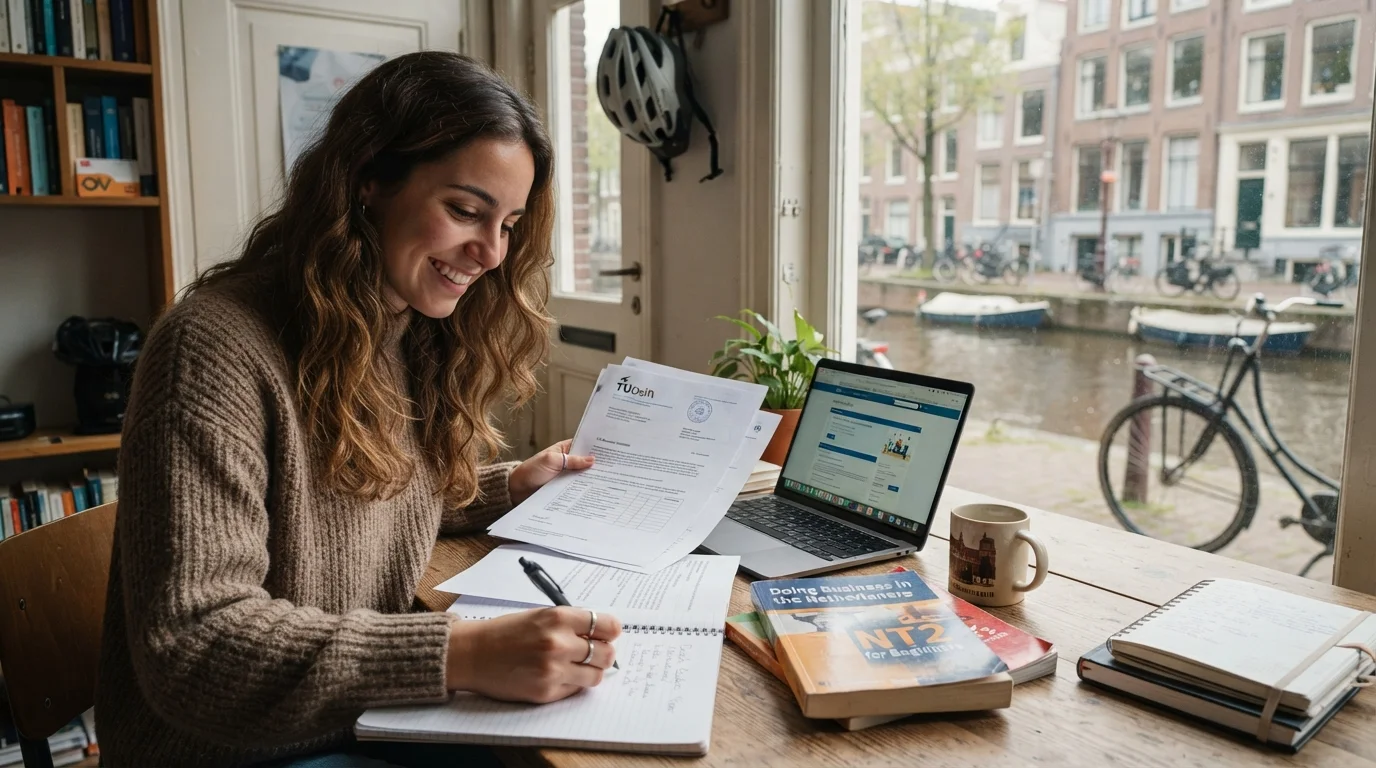
Starting your studies in the Netherlands is an exciting milestone. Renowned for top-tier universities, vibrant student cities like Amsterdam, Utrecht, Leiden, and Groningen, and a high quality of life, the Dutch higher education system attracts tens of thousands of international students every year. However, relocating to a new country and adjusting to a different academic environment can feel overwhelming if you do not prepare early.
From navigating the notorious Dutch housing market to understanding the unique Bindend Studieadvies (BSA) system, preparing thoroughly before your arrival will set you up for success. In this comprehensive guide, we cover everything you need to know to prepare for the Dutch academic year, including administrative steps, housing advice, cultural integration, and practical tips for learning the Dutch language.
Before you step foot on campus, you must ensure all your administrative paperwork is in order. Dutch bureaucracy is generally efficient, but deadlines are strict.
If you are a non-EU/EEA citizen, you will need a residence permit (and potentially an entry visa/MVV) to study in the Netherlands. In most cases, your host university will apply for the permit on your behalf through the Immigration and Naturalisation Service (IND). Start this process as soon as you receive your acceptance letter, as document gathering—such as bank statements showing proof of sufficient funds—can take several weeks.
Once you arrive in the Netherlands, one of your highest priorities is registering at your local municipality (gemeente). Upon registration, you will receive your Burgerservicenummer (BSN), which is the Dutch citizen service number. You cannot open a local bank account, take out Dutch health insurance, or work a part-time job without a BSN. Make sure to book your municipality appointment early, as slots fill up quickly ahead of the September intake.
Health insurance is mandatory in the Netherlands, but the requirements depend on your origin and activities:
It is no secret that the Netherlands faces a severe housing shortage, particularly in university hubs like Amsterdam, Utrecht, Delft, and Maastricht. Dutch universities rarely have centralized campus dormitories, meaning students must secure their own accommodation in the private sector.
If you are planning your enrollment, whether you are entering an undergraduate course or following a specialized master's degree application process in the Netherlands, housing must be your priority months in advance.
The academic environment in the Netherlands may differ significantly from what you experienced in your home country. Dutch universities place a strong emphasis on independence, critical thinking, and egalitarian collaboration.
Dutch professors encourage open debate. Students are expected to ask questions, challenge ideas, and contribute to group discussions. This direct approach might feel intimidating at first, but it is rooted in transparency and mutual respect. Familiarizing yourself with mastering Dutch direct communication will help you navigate both university work groups and future workplace interactions with confidence.
Many institutions, such as Maastricht University and Erasmus University Rotterdam, use Problem-Based Learning. Instead of traditional passive lectures, you will spend much of your time in small tutorial groups solving real-world case studies, presenting findings, and assessing your peers.
During your first year of a bachelor's degree, you will encounter the Bindend Studieadvies (Binding Study Advice). Universities set a strict threshold of credits (usually 45 to 60 ECTS) that you must pass in your first year. Failing to meet this minimum requirement means you will be expelled from the program and barred from re-enrolling for several years. Take your first-term exams seriously!
Living costs in the Netherlands can be high. On average, an international student spends between €1,000 and €1,500 per month, including rent, food, insurance, and social activities.
Public transport in the Netherlands relies on the OV-chipkaart or direct contactless payments (OVpay). While Dutch students get free public transport passes, international students generally do not unless they work a minimum number of hours per month. To save money, invest in a reliable secondhand bicycle—the ultimate Dutch transport mode—and secure an NS Flex train subscription for discounted weekend travel.
Many international students work part-time in hospitality, retail, or delivery services to support themselves. EU/EEA students can work without restrictions, while non-EU students are limited to 16 hours per week and require a work permit managed by their employer. If you are looking for employment alongside your studies, explore resources on finding English-speaking student jobs across major Dutch cities.
While over 90% of the Dutch population speaks fluent English, relying solely on English can limit your experience. Learning the local language allows you to move beyond the international student bubble, integrate into Dutch student associations (studentenverenigingen), and build lasting local friendships.
Here are a few essential terms to help you get started before academic life kicks off:
Preparing for university leaves little time for traditional evening language classes. That is where an intelligent learning tool makes all the difference. Using the StroopTaal app, you can prepare for life in the Netherlands on your own schedule. StroopTaal offers AI-powered personalized learning plans tailored to your current proficiency level—whether you are starting from zero (A0) or polishing conversational skills (B2).
With StroopTaal's real-life Dutch conversation practice powered by AI, you can practice ordering food at a local café, talking to a Dutch landlord, or conversing with classmates before your plane even lands. Combining daily interactive dialogue games with spaced-repetition vocabulary tools ensures that key academic and daily vocabulary stays fresh in your mind.
To ensure nothing falls through the cracks, use this handy pre-arrival checklist as August approaches:
Studying in the Netherlands offers world-class education, rich cultural experiences, and an unforgettable student adventure. By organizing your administrative duties early, tackling housing ahead of time, understanding academic expectations, and making an effort to learn the language, you will transition smoothly into your new life as an international student.
Ready to get a head start on your Dutch language journey? Download the StroopTaal app today to access custom AI lessons, master essential student vocabulary, and step onto campus feeling fully prepared!
Share this article:
Stepping into your first office meeting in the Netherlands can feel both exciting and intimidating. Even if your company operates primarily in...
Read moreWhen starting a new job in the Netherlands, your employment contract might contain terms that seem familiar—salary, start date, and job title....
Read moreAmsterdam continues to rank among Europe's most vibrant, lucrative, and international economic hubs. In 2026, the city's cosmopolitan atmosphere,...
Read more