Dutch Eating Habits: Decoding the Bread & Cheese Lunch
Welcome to the Land of the 'Boterham' Imagine your first day at a Dutch office. The clock strikes noon, and a curious ritual unfolds. Instead of...
Read more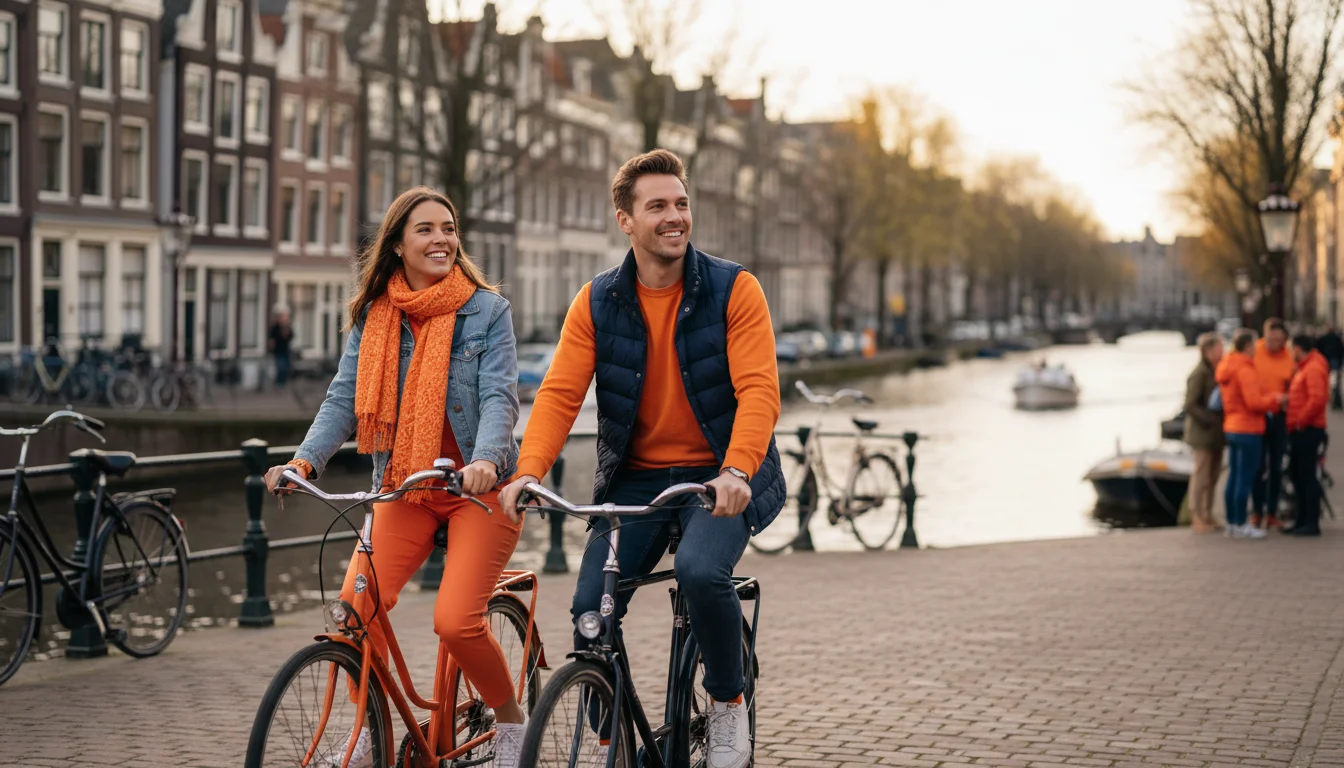
Step into any Dutch city on April 27th, and you'll be swept into a dizzying, joyous, and utterly orange spectacle. Canals clog with party boats, streets transform into sprawling flea markets, and the air thrums with music and the collective cheer of millions. This is Koningsdag, or King's Day, the biggest national party in the Netherlands. But why orange? And how did this nationwide celebration of the monarch's birthday evolve into the vibrant festival it is today?
For anyone learning Dutch, living as an expat in the Netherlands, or preparing for their inburgeringsexamen (integration exam), understanding King's Day is a crucial lesson in Dutch culture. It’s a day that perfectly encapsulates Dutch pragmatism, love for a good party, and deep-seated national pride. Let's dive into the history behind the orange madness and explore how you can celebrate this incredible day like a true local. It's truly one of the most spectacular events you can experience during April in the Netherlands.
The celebration we know today didn't start as King's Day. Its roots go back to the late 19th century and have shifted with the changing monarchy.
The tradition began on August 31, 1885, as Prinsessedag (Princess's Day) to celebrate the fifth birthday of Princess Wilhelmina. The idea was to promote national unity in a time of political division. When Wilhelmina ascended to the throne in 1890, the holiday was renamed Koninginnedag (Queen's Day).
In 1949, the celebration moved to April 30th, the birthday of the new monarch, Queen Juliana. Under her reign, the holiday became the beloved national party we recognize. The royal family would stand on the steps of Soestdijk Palace as thousands of Dutch citizens paraded past to present them with flowers and gifts. This televised event became an annual tradition.
When Queen Beatrix took the throne in 1980, she made a pragmatic and popular decision. Instead of moving the holiday to her own birthday in late January (a month known for cold, dreary weather), she kept it on April 30th to honor her mother. She also changed the format, choosing to visit one or two towns each year with her family, actively participating in local celebrations. This made the royals more accessible and the day even more of a nationwide event.
The most recent change came in 2013 when Queen Beatrix abdicated and her son, Willem-Alexander, became the first King of the Netherlands in over a century. The holiday was officially renamed Koningsdag (King's Day) and moved to his birthday: April 27th. The first King's Day in 2014 was a historic moment, marking a new era for the Dutch monarchy and its most famous celebration.
The most striking feature of King's Day is the color. From orange wigs and feather boas to orange-frosted cakes, everything is drenched in the vibrant hue. This phenomenon is known as oranjegekte (orange madness or orange fever). But why orange, when the Dutch flag is red, white, and blue?
The answer lies with the royal family's name: the House of Orange-Nassau (Huis van Oranje-Nassau). The dynasty's founder is a key figure in Dutch history: William of Orange. He led the Dutch Revolt against Spanish rule in the 16th century, a conflict that eventually led to the independence of the Netherlands. Though he never became king, he is revered as the 'Father of the Fatherland' (Vader des Vaderlands).
William inherited the title 'Prince of Orange' from the sovereign Principality of Orange in what is now Southern France. His title, 'van Oranje,' became synonymous with the fight for Dutch freedom. Over the centuries, the color orange evolved into a powerful symbol of the Dutch royal family, national pride, and identity. You'll see this oranjegekte flare up not just on King's Day, but also during major international sporting events like the World Cup.
While the festive atmosphere is palpable everywhere, several key traditions define the King's Day experience.
Perhaps the most cherished tradition is the vrijmarkt, which translates to 'free market'. On King's Day, the government permits sales on the street without a permit and without value-added tax (VAT). This transforms the entire country into one giant flea market. Families lay out blankets to sell old toys and clothes, aspiring musicians perform on street corners, and people sell homemade baked goods. It’s a wonderful display of community, commerce, and the Dutch love for a good bargain (een koopje).
From massive, ticketed electronic music festivals in cities like Amsterdam and Rotterdam to small-town stages with local bands, music is the heartbeat of King's Day. In cities with canals, like Amsterdam and Utrecht, the waterways become a floating parade of boats packed with celebrating, dancing people. It’s a chaotic but incredibly festive sight.
No Dutch celebration is complete without specific treats. On King's Day, bakeries across the country sell oranje tompouce – a variation of the classic Dutch pastry, but with its signature pink icing swapped for bright orange. It's a sticky, creamy delight made of puff pastry and pastry cream.
To wash it down, many adults enjoy an Oranjebitter. This is a bright orange liqueur that was created in the 17th century to celebrate a victory by Prince Frederick Henry. Its popularity wanes for most of the year, but it becomes the unofficial drink of the day every April 27th.
The party doesn't wait for the 27th. In many cities, the celebration kicks off on the evening of April 26th, known as Koningsnacht (King's Night). Pubs, clubs, and outdoor stages host parties that go late into the night, setting the stage for the main event the next day.
Ready to join the fun? Here are some practical tips to make the most of your King's Day experience.
Practicing these phrases is easy with StroopTaal's AI conversation feature. You can have real-life Dutch conversation practice before you even hit the streets, building your confidence for the big day.
King's Day is the spectacular kick-off to a period of national reflection and celebration in the Netherlands, followed closely by Remembrance Day (May 4th) and the joyous celebration of Liberation Day on May 5th.
King's Day is far more than just the King's birthday party. It's a vibrant expression of Dutch history, culture, and national identity. It’s a day when social barriers seem to disappear, and everyone comes together—united by the color orange and a shared love for a good time. It’s a day of organized chaos, entrepreneurial spirit, and immense community pride.
Whether you're exploring the crowded canals of Amsterdam or a charming village vrijmarkt, experiencing King's Day is an unforgettable cultural immersion. To truly deepen that experience, understanding the language and the cultural nuances behind the celebration is key. The StroopTaal app offers dedicated cultural lessons that explore traditions like King's Day, helping you not just speak Dutch, but understand the Dutch way of life.
So, this April 27th, put on your best orange outfit, raise a glass of Oranjebitter, and shout "Leve de Koning!" (Long live the King!). You'll be taking part in a tradition that is truly, uniquely Dutch.
Share this article:
Welcome to the Land of the 'Boterham' Imagine your first day at a Dutch office. The clock strikes noon, and a curious ritual unfolds. Instead of...
Read moreApril in the Netherlands: A Technicolor Dream of Tulips and Tradition Imagine a landscape painted in strokes of vibrant red, sunny yellow, and deep...
Read moreFrom Solemn Silence to Joyful Noise: The Spirit of May 5th As the clock strikes midnight on May 4th, a profound shift occurs across the Netherlands....
Read more