April in the Netherlands: Your Guide to Tulip Season & Keukenhof
April in the Netherlands: A Technicolor Dream of Tulips and Tradition Imagine a landscape painted in strokes of vibrant red, sunny yellow, and deep...
Read more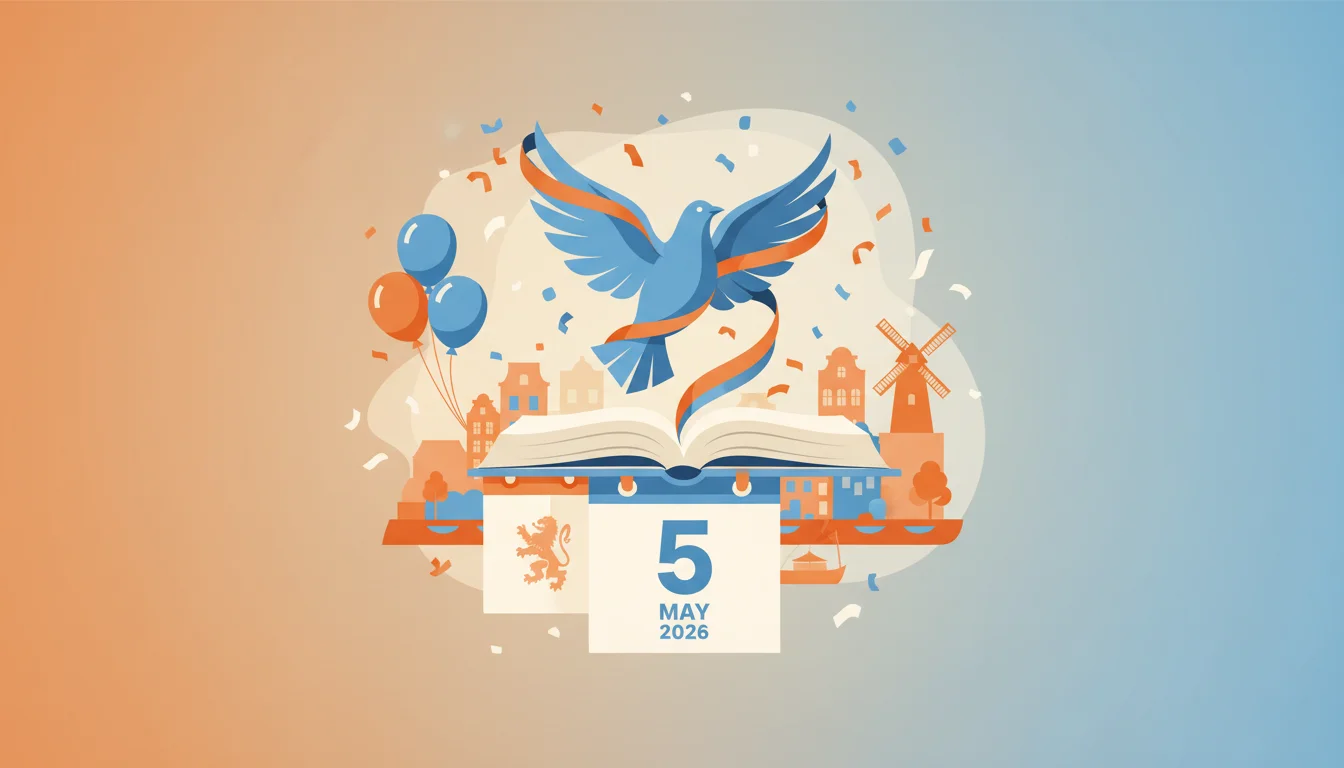
As the clock strikes midnight on May 4th, a profound shift occurs across the Netherlands. The quiet, reflective mood of Dodenherdenking (Remembrance Day) gives way to a vibrant, nationwide celebration. This is Bevrijdingsdag, or Liberation Day, a day when the Dutch commemorate the end of the Nazi occupation in 1945 and, more broadly, celebrate the precious gift of freedom. For anyone learning Dutch or living in the Netherlands, experiencing May 5th is to witness a core part of the national identity come alive. In 2026, the country will once again burst into a symphony of music, festivals, and shared joy. This guide will walk you through everything you need to know to understand and participate in this powerful Dutch holiday.
Bevrijdingsdag is the Dutch national holiday celebrating the liberation of the Netherlands from Nazi occupation on May 5, 1945. In English, Bevrijdingsdag means Liberation Day, and it is one of the most important dates in the Dutch calendar. The day combines remembrance, public discussion about freedom, and joyful celebrations such as concerts, festivals, torch relays, and communal meals.
Bevrijdingsdag is observed every year, although it is not automatically a paid day off for every employee. Its meaning is closely connected to Dodenherdenking on May 4th: the Netherlands first remembers victims of war and then celebrates the return of freedom. That contrast explains why May 5th can feel both festive and thoughtful rather than simply being another public holiday.
To truly appreciate the party, you must first understand the history. Bevrijdingsdag marks the formal capitulation of German forces in the Netherlands on May 5, 1945. This event, which took place in the town of Wageningen, ended five years of brutal occupation during World War II. The day before, May 4th, is a solemn occasion dedicated to remembering all Dutch civilians and soldiers who have died in conflicts and peacekeeping missions since the start of WWII. At 8 PM on May 4th, the entire country observes two minutes of silence—traffic stops, televisions broadcast the ceremony from Dam Square, and a respectful quiet descends everywhere.
This poignant act of remembrance makes the explosion of celebration on May 5th all the more meaningful. It’s a transition from honoring sacrifice to celebrating the freedom that was so hard-won. You'll often hear the phrase, "Vrijheid geef je door" (You pass on freedom), underscoring the belief that freedom is not a given but a responsibility to be cherished and shared with future generations.
This is a common point of confusion for expats. While Bevrijdingsdag is an official national holiday every year, it is only a mandatory day off for most workers once every five years (in so-called 'lustrum' years like 2020, 2025, 2030). In other years, including 2026, whether you have a day off depends on your collective labor agreement (CAO). Government employees, for example, always have the day off. For others, it's best to check with your employer. Regardless of its official work status, the celebrations happen every single year with the same level of enthusiasm!
Bevrijdingsdag 2026 takes place on Tuesday, May 5, 2026. The national celebration will include free Bevrijdingsfestivals in provincial capitals, the liberation flame relay from Wageningen, Freedom Meals, local events, and the traditional 5 May Concert in Amsterdam.
Because May 5 falls on a Tuesday in 2026, some people may combine the holiday with the surrounding weekend, while others will attend events after work if their employer does not grant the day off. Festival programs and exact schedules are normally confirmed closer to the date, so check local organizers and the Nationaal Comité 4 en 5 mei before travelling. Expect busy trains, crowded city centers, outdoor stages, and changeable spring weather.
Bevrijdingsdag is not a day for quiet reflection; it's a day of active, public celebration. The festivities are widespread, vibrant, and incredibly welcoming. Here are the cornerstones of the modern celebration.
The most visible part of the day are the Bevrijdingsfestivals. These are massive, free music festivals held in the provincial capitals across the country—14 in total. From Groningen to Maastricht, each city hosts a lineup of famous Dutch artists and emerging talent. The atmosphere is electric, filled with people of all ages dancing, singing, and enjoying the freedom to gather. These festivals are the modern heartbeat of the celebration, turning the abstract concept of 'vrijheid' into a tangible, shared experience. The music is diverse, ranging from pop and rock to electronic and world music, ensuring there's something for everyone.
The celebrations officially kick off in the middle of the night between May 4th and 5th in Wageningen, known as the 'City of Liberation'. Here, the Bevrijdingsvuur is lit in a special ceremony. From this central point, hundreds of relay runners transport torches to ignite flames at the 14 festivals across the country. This tradition symbolizes the spread of liberation across the Netherlands and connects the modern festivities directly to their historical roots. It’s a powerful and moving sight, reminding everyone of the journey from darkness to light.
The day's celebrations culminate in a spectacular event in Amsterdam: the 5 mei-concert. Held on a floating stage on the Amstel River, right in front of the Royal Theater Carré, this televised classical music concert is the grand finale. The King, Queen, and other dignitaries often attend, watching from a boat as a renowned orchestra performs. The concert is free and open to the public, with thousands gathering on the riverbanks and in boats to listen. It's a beautiful, poignant end to a day of exuberant celebration, blending festivity with a sense of national pride and gratitude.
Ready to join the festivities? Here’s what you need to know to make the most of May 5th, 2026.
While every provincial capital has a festival, some of the largest and most popular are in:
Dutch Liberation Day is the English name for Bevrijdingsdag, celebrated in the Netherlands every May 5 to mark liberation from Nazi occupation in 1945. It is both a historical commemoration and a contemporary celebration of freedom, with national festivals, music, public ceremonies, and conversations about democracy.
The word “Dutch” distinguishes this holiday from liberation days in other countries, but the date and traditions are specifically Dutch. Wageningen has a central role because the German capitulation in the Netherlands was signed there, while cities throughout the country now host their own events.
Participating in Bevrijdingsdag is a fantastic language and cultural immersion experience. You’ll hear Dutch all around you, from song lyrics to conversations in the crowd. Here are a few key terms to know:
To truly connect with the spirit of the day, understanding these nuances is key. It's one thing to know the vocabulary, but another to discuss what 'vrijheid' means to a Dutch person. The cultural lessons and AI-powered conversation practice in the StroopTaal app can help you have these deeper conversations with confidence, moving beyond simple translations to grasp the important cultural context that is so vital for integration.
While the music festivals are the main event, there are other meaningful ways to participate in Bevrijdingsdag.
Throughout the country, thousands of Vrijheidsmaaltijden are organized. These are communal meals—from small potlucks in a neighbor's garden to large, organized dinners in community centers—where people come together to eat and discuss freedom and democracy. It’s a wonderful, low-key initiative that fosters connection and dialogue, and it's an incredible opportunity for expats to meet locals in a meaningful setting.
Many museums, particularly those focused on history and the Second World War, have special programs or exhibitions around May 5th. The Verzetsmuseum (Dutch Resistance Museum) in Amsterdam or the Nationaal Militair Museum in Soest are excellent places to visit to deepen your understanding of the historical context. Check their websites for special Bevrijdingsdag activities.
Bevrijdingsdag is far more than just a party. It's a vibrant, living lesson in Dutch history and values. It’s a day that masterfully balances remembrance of a dark past with an optimistic and energetic celebration of the present. For anyone living in or visiting the Netherlands, participating in the May 5th festivities offers a unique window into the soul of the nation. It's a day to feel connected, to celebrate the freedoms we all share, and to understand that this joy is never taken for granted.
So in 2026, wear something comfortable, be ready for any weather, and dive into one of the most significant and enjoyable days on the Dutch calendar. Celebrate freedom, enjoy the music, and say "Proost op de vrijheid!" with everyone around you.
Ready to master the Dutch language so you can fully immerse yourself in cultural events like Bevrijdingsdag? Download the StroopTaal app today and start your personalized journey with AI-powered lessons, real-life conversation practice, and cultural insights that bring the Netherlands to life.
Share this article:
April in the Netherlands: A Technicolor Dream of Tulips and Tradition Imagine a landscape painted in strokes of vibrant red, sunny yellow, and deep...
Read moreThe Magic of the Dutch Word 'Lekker' If you have spent more than five minutes in the Netherlands, or if you have just started learning the Dutch...
Read moreWelcome to the Dutch Spring: The Magic of Bloemencorso There is no better way to bid farewell to the gloomy, grey Dutch winter than by welcoming the...
Read more