Affordable Dutch Classes for Inburgering in Smaller Cities
The Challenge of Finding Budget-Friendly Dutch Classes Outside the Randstad Moving to the Netherlands is an exciting adventure, but for many expats,...
Read more
This article was drafted by AI and edited by a person before it was published.
AI can get things wrong. For anything official, check the source it points to.
AI-generated image
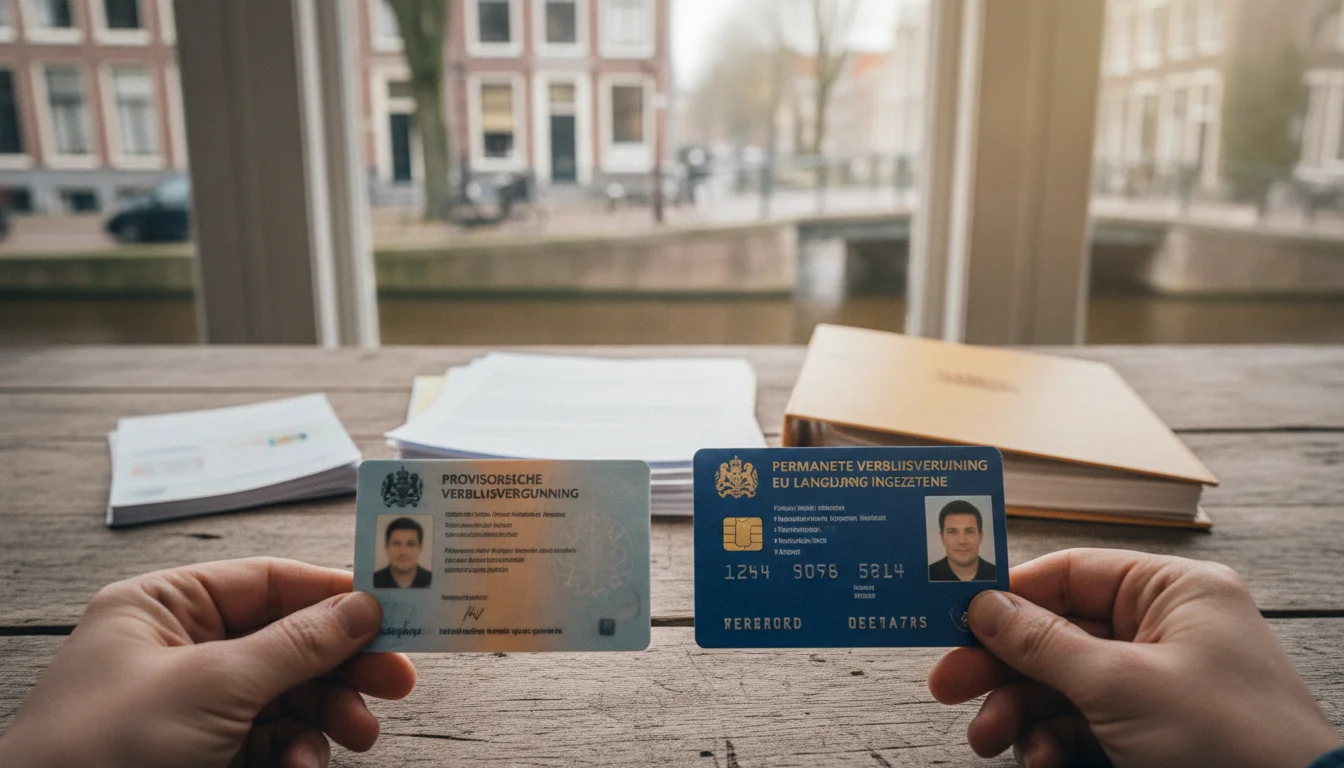
Moving to the Netherlands is an exciting adventure—windmills, cycling lanes, and stroopwafels quickly become part of your daily rhythm. Yet, for many non-EU/EEA expats, those initial years often feel temporary, tethered to specific work or study permits. If you're ready to trade that uncertainty for stability, you've likely started looking toward the horizon: permanent residency. The transition from a provisional to a permanent Dutch residence permit (verblijfsvergunning voor onbepaalde tijd) is a major milestone. It grants you the freedom to live and work in the Netherlands indefinitely without a sponsor. The most crucial bridge to crossing this milestone is successful civic integration (inburgering). In this comprehensive guide, we will unpack the legal requirements, the application process with the IND, and how mastering the Dutch language can secure your future.
A provisional residence permit is inherently temporary. Typically valid for one to five years, it remains strictly tied to your specific purpose of stay. If you lose your job, your relationship ends, or you complete your studies, your permit may be revoked or fail to renew. This structural dependency can create underlying stress for expats looking to build a stable life.
In contrast, a permanent residence permit offers unparalleled security. Once obtained, you no longer need a sponsor (like an employer or partner). You have unrestricted access to the Dutch labor market, meaning you can work for any employer or start your own business without requiring a work permit (TWV). Furthermore, your permit cannot be easily revoked, provided you do not commit serious crimes or move your main residency outside the Netherlands.
There are two main types of permanent residency you can apply for:
Both pathways require you to meet strict conditions set by the Immigration and Naturalisation Service (IND), with civic integration serving as the ultimate prerequisite.
To transition to a permanent permit, the Dutch government requires you to demonstrate that you have integrated into Dutch society. This is not just a bureaucratic hurdle; it is a way to ensure that you can actively participate in communal life, understand your rights and duties, and communicate effectively with your neighbors and colleagues.
The primary proof of integration is the civic integration diploma (inburgeringsdiploma). Obtaining this diploma involves passing a series of exams covering reading, writing, listening, speaking, and Knowledge of Dutch Society (Kennis van de Nederlandse Samenleving - KNM).
The required language level has traditionally been A2, though under newer integration acts, there is a gradual shift towards B1 to encourage deeper linguistic proficiency. Gaining deep cultural insight is equally vital. To succeed, you must master both the language and the cultural norms, which is why it helps to learn how to master the Inburgering KNM exam with StroopTaal as you prepare for this critical component. By understanding Dutch history, political structures, and social norms, you build a solid foundation for your permanent stay.
To successfully apply for a permanent residence permit, you must satisfy several criteria simultaneously. Here is the checklist of requirements you need to fulfill:
You must have lived in the Netherlands legally and continuously for at least five uninterrupted years immediately preceding your application date. Your temporary permits during this period must have been valid and for a non-temporary purpose of stay. Note that some temporary permits, like study visas, may only count half toward this five-year requirement depending on whether you apply for EU long-term residency or national permanent residency.
At the moment you submit your application, you must hold a valid temporary residence permit. Furthermore, you must continue to meet the conditions of that temporary permit during the entire period the IND is processing your application.
You must prove that you earn enough money to support yourself and your family. The income must be independent, stable, and sustainable. Generally, this means having an employment contract valid for at least another 12 months at the time of application, with earnings meeting the competitive threshold set by the IND.
You must have a clean criminal record. Any serious offenses, pending investigations, or significant fines can lead to a rejection of your application by the IND.
As mentioned, you must have passed all required integration exams or have obtained an official exemption (for example, by holding certain Dutch academic diplomas or certificates).
Once you meet all the criteria, the next step is submitting your application to the IND. This process requires meticulous attention to detail, as any missing document can delay the decision by months.
First, gather all your supporting documents. This includes your integration diploma, recent payslips, your employment contract, and a copy of your valid passport. Next, log in to the IND portal using your DigiD. The digital application form will guide you through uploading your documents and paying the non-refundable application fee.
During this administrative phase, you will realize that navigating Dutch government agencies requires a specific, methodical approach. Learning how to write formal emails and gather the correct paperwork is essential, so check out our guide on navigating Dutch bureaucracy for official communication. Understanding how to interact with civil servants and structure your correspondence can save you significant time and stress.
After submission, the IND has a statutory period of up to six months to make a decision. During this waiting period, your current provisional permit must remain valid, or you must obtain a bridging sticker (verblijfsaantekening) from an IND desk to prove your legal stay.
Transitioning to permanent residence is a long-term project. Here are practical steps you can take starting today to ensure a smooth transition:
Securing a permanent Dutch residence permit is the ultimate validation of your integration journey, transforming your status from a temporary guest to a permanent member of society. By prioritizing your civic integration and language skills now, you aren't just checking boxes—you are building a secure, long-term foundation for your life in the Netherlands. While the legal requirements and bureaucratic processes may seem daunting, careful planning, timely preparation, and language mastery will pave your way to success.
By focusing on your civic integration early and utilizing modern learning tools like StroopTaal to support your Dutch learning, you can approach your exams and the IND process with more confidence. Ready to take the first step toward your permanent future in the Netherlands? Download StroopTaal today and start your personalized path to Dutch fluency!
Share this article:
The Challenge of Finding Budget-Friendly Dutch Classes Outside the Randstad Moving to the Netherlands is an exciting adventure, but for many expats,...
Read moreBeyond the Classroom: Why Social Integration is the Real Goal of Inburgering Moving to the Netherlands is an exciting adventure, but integrating into...
Read moreMoving to a new country involves adjusting to many novel systems, but few are as vital—or as frequently misunderstood—as the healthcare system....
Read more