
How to Negotiate Your Salary in the Netherlands: A Career Guide
Introduction: Navigating the Dutch Job Market Congratulations! You have successfully navigated the interview process, impressed the hiring managers,...
Read more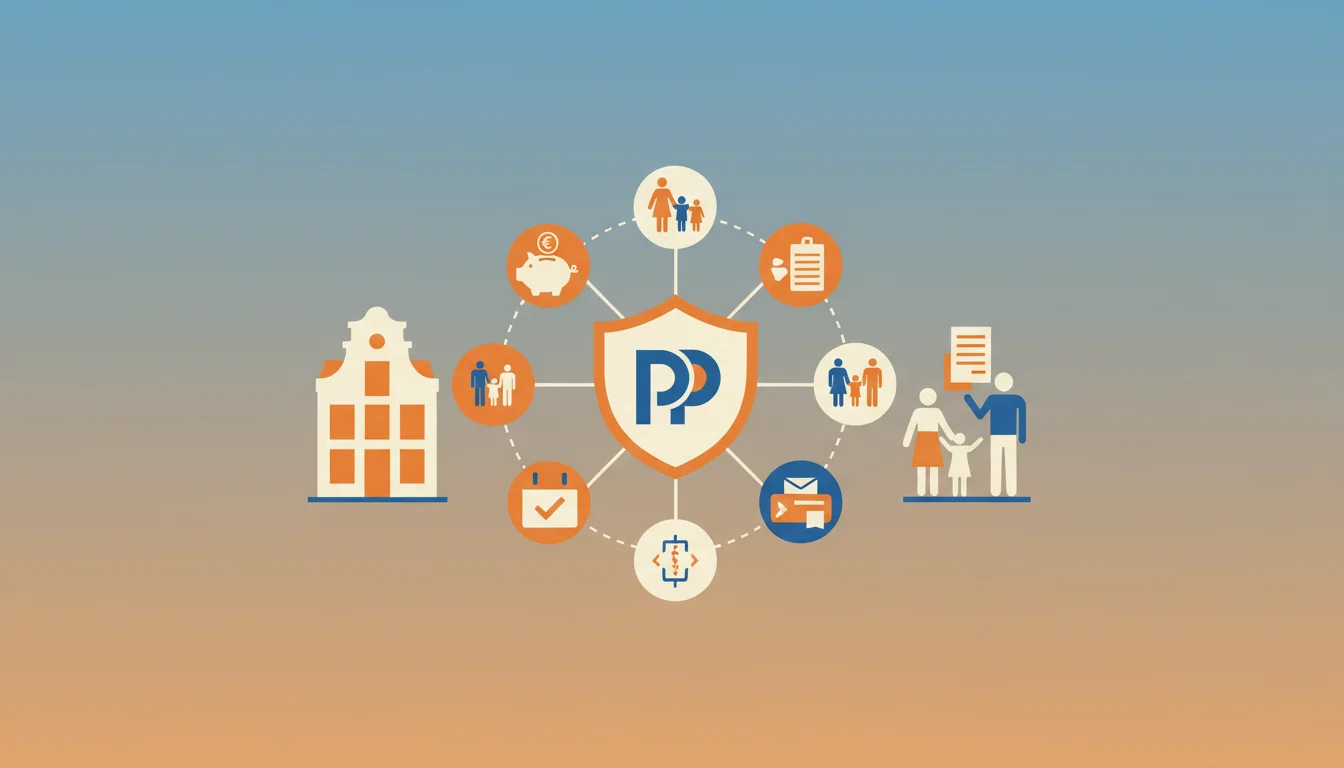
Moving to the Netherlands is an exciting adventure filled with bicycles, stroopwafels, and excellent career opportunities. However, beneath the picturesque canals and thriving expat job market lies a complex bureaucratic framework designed to protect residents from financial ruin: the Dutch social security system. For international workers, understanding this system is not just about knowing your rights—it is fundamentally about protecting your legal residency status.
One of the most misunderstood aspects of this system is the Participatiewet, commonly referred to as the P-Wet. Whether you are a highly skilled migrant, a European Union citizen exercising your treaty rights, or someone preparing for your inburgering (civic integration) exams, knowing how the P-Wet and broader social security benefits apply to you is crucial. A single misstep, such as applying for the wrong type of financial assistance, can have severe consequences for your right to stay in the Netherlands.
In this comprehensive guide, we will decode the Dutch social security system, dive deep into what the P-Wet actually entails, and provide actionable advice for international workers. We will also explore how language plays a barrier in accessing your rights, and how mastering Dutch can give you the ultimate peace of mind.
The Dutch welfare state (verzorgingsstaat) is renowned for being robust, but it is also highly categorized. To understand where the P-Wet fits in, you first need to understand the two main pillars of Dutch social security (sociale zekerheid):
These are compulsory insurances that cover everyone living or working legally in the Netherlands. They are funded through income tax and provide a basic safety net for long-term situations. Key examples include:
These insurances are exclusively for people who are employed. Your employer automatically deducts the premiums from your gross salary. If you ever need to rely on these, you will generally be dealing with the UWV (Employee Insurance Agency). For a deeper dive into this specific agency, we highly recommend reading our guide on navigating the Dutch UWV when facing job loss. The main employee insurances are:
For more detailed official documentation, you can always consult the Dutch Government's official social security page.
Now that we understand the insurances, where does the P-Wet come in? The Participatiewet (Participation Act) is not an insurance; it is a social provision. It acts as the absolute safety net of last resort in the Netherlands.
Introduced in 2015, the P-Wet replaced the former Wet werk en bijstand (WWB), the WSW (sheltered employment), and parts of the Wajong (disability benefits for young people). The core philosophy of the P-Wet is in its name: Participation. The Dutch government believes that everyone who can work, should work, regardless of physical or mental limitations.
The primary financial instrument of the P-Wet is the bijstandsuitkering (often just called bijstand). This provides a minimum income to anyone living legally in the Netherlands who does not have enough money to support themselves and does not qualify for any other benefits (like the WW).
However, getting the bijstand is not easy. It is strictly means-tested. The municipality (gemeente), which administers the P-Wet, will scrutinize your financial situation, including:
This is where the situation becomes critical for expats. Applying for the P-Wet can jeopardize your residence permit.
If you are a non-EU citizen residing in the Netherlands on a temporary permit—such as a Highly Skilled Migrant (kennismigrant) visa, a student visa, or an orientation year visa—your right to reside here is usually tied to your ability to support yourself independently. You are expected to have "sufficient means of existence."
Because the P-Wet is funded by public funds (taxpayer money), claiming it signals to the government that you can no longer support yourself. If you apply for a bijstandsuitkering, the municipality is legally obligated to notify the IND (Immigration and Naturalisation Service). The IND may then decide to revoke your residence permit. Always check the IND guidelines on public funds before applying for any municipal assistance.
For EU citizens, the rules are slightly different due to European freedom of movement, but risks still exist. If you are an EU citizen who has lived in the Netherlands for less than five years and you apply for the P-Wet, the IND can assess whether you have become an "unreasonable burden" on the Dutch social assistance system. If they decide you are, you could lose your right of residence.
Practical Tip: If you lose your job, always rely on your WW (unemployment benefit) first. WW is an employee insurance that you paid into; claiming WW does not affect your residence permit because it is not considered "public funds" in the same way the P-Wet is.
Because the P-Wet is a last resort, understanding your primary rights as an employee is vital. Your access to employee insurances like the WW is heavily influenced by your employment contract.
In the Netherlands, the distinction between a temporary contract (tijdelijk contract) and a permanent contract (vast contract) dictates much of your job security. If you are unsure about your current standing, review our guide on the differences between vast and tijdelijk contracts.
If your temporary contract is simply not renewed, you are generally entitled to WW benefits immediately, provided you meet the "weeks requirement" (having worked 26 out of the last 36 weeks). If you are considering reducing your hours to avoid burnout or manage personal matters, be aware that this can affect the amount of WW you might receive later. For more on this lifestyle change, check out our comprehensive post on working part-time in the Netherlands.
Dealing with the UWV or the local Gemeente is notoriously stressful, and doing it in a foreign language amplifies that stress tenfold. While many Dutch civil servants speak English, official correspondence, legally binding decisions regarding your benefits, and the complex forms you must fill out are almost exclusively in Dutch.
If you have to discuss your work capacity with a UWV doctor or explain your financial situation to a municipal consultant for the P-Wet, clear communication is essential. Misunderstandings can lead to delayed payments or even fines.
To help you navigate these waters, here is a quick vocabulary list you should master:
Memorizing bureaucratic terminology isn't exactly fun, but it is necessary. This is where StroopTaal comes in. Our app features vocabulary building with spaced repetition, ensuring that critical terms like arbeidsongeschikt stick in your long-term memory. Instead of cramming before a UWV appointment, you can learn naturally over time.
To summarize, here are actionable steps every international worker in the Netherlands should take to protect themselves:
The Dutch social security system, with the P-Wet acting as its final safety net, is designed to ensure that no one falls into absolute poverty. However, as an international worker, the system comes with caveats. While employee insurances like WW are safe and rightfully yours to claim, relying on the public funds of the P-Wet can trigger unwanted attention from the IND and threaten your Dutch dream.
Knowledge is your best defense. By understanding the difference between national insurances, employee insurances, and social assistance, you can make informed decisions about your career and financial safety. Furthermore, bridging the language gap will empower you to advocate for yourself in any bureaucratic situation.
Ready to master the Dutch language and navigate life in the Netherlands with confidence? Download StroopTaal today and experience AI-powered personalized learning plans tailored specifically to expats and inburgering candidates. Start your daily streak and turn the daunting Dutch bureaucracy into a breeze!
Share this article:
Introduction: Navigating the Dutch Job Market Congratulations! You have successfully navigated the interview process, impressed the hiring managers,...
Read moreNavigating Job Loss in the Netherlands Losing your job is a stressful experience no matter where you are in the world. But when it happens in a...
Read moreIntroduction: The Thriving Dutch Tech Ecosystem The Netherlands has rapidly transformed into one of Europe's most vibrant and innovative...
Read more