
Mastering Dutch Plural Nouns: Simple Rules for -en and -s
Unlock the Logic Behind Dutch Plural Nouns If you have recently started your Dutch language journey, you have likely noticed that the language is...
Read more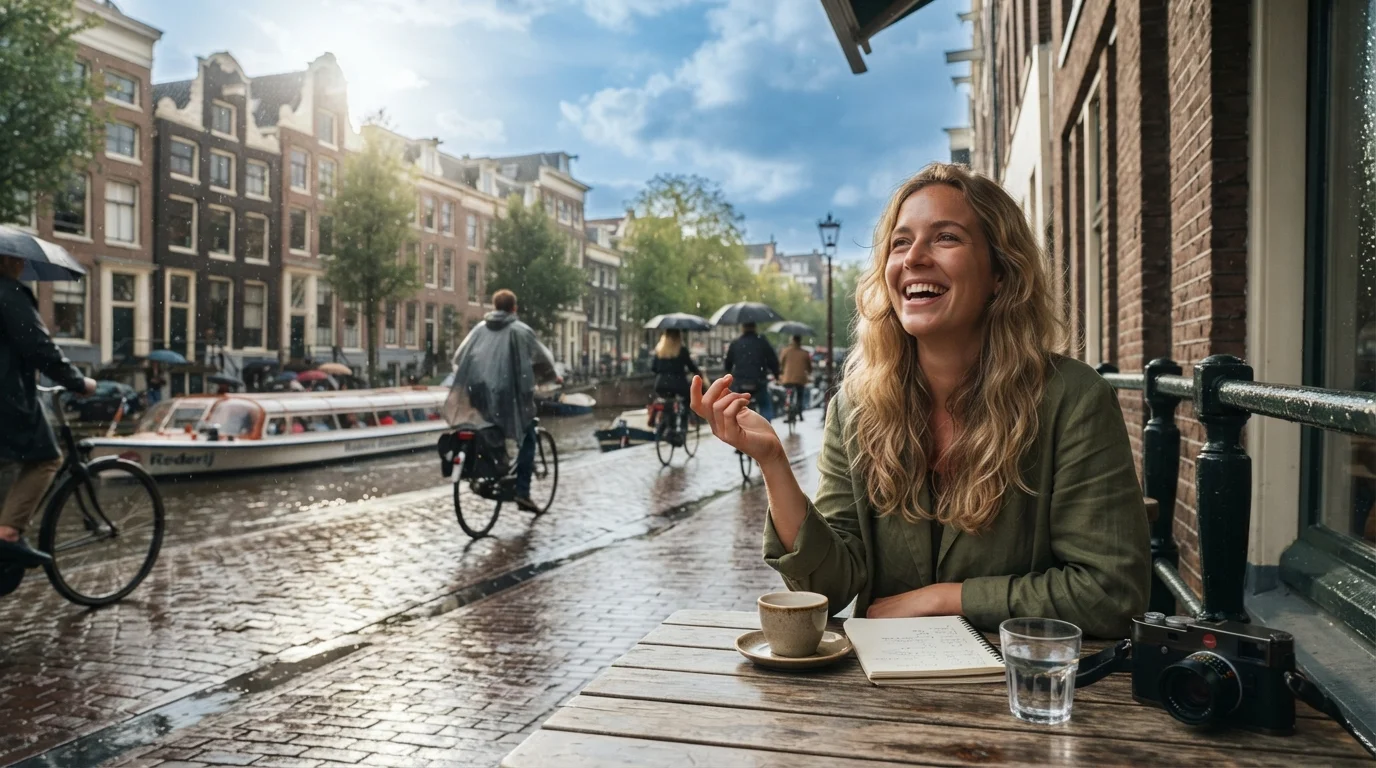
August in the Netherlands is a beautiful, unpredictable, and highly discussed time of year. As the peak of summer gently rolls into the transitional phase known as the nazomer (late summer or Indian summer), the weather becomes the ultimate national talking point. One moment you are basking in 30-degree sunshine on a terrace in Utrecht, and the next, you are seeking shelter from a sudden, dramatic downpour.
To truly integrate into Dutch society, survive daily small talk, or prepare for your civic integration exams, you must master the art of discussing the weather. The Dutch are famously obsessed with meteorological shifts, frequently checking apps like Buienradar and consulting the Royal Netherlands Meteorological Institute (KNMI). What better way to join this national pastime than by learning the colorful, quirky idioms the locals use?
In this comprehensive guide, we will explore 10 essential Dutch idioms for describing late summer weather in August. We will break down their literal meanings, figurative uses, and how to deploy them like a native speaker.
In the Netherlands, talking about the weather is not just a filler conversation; it is a bonding ritual. Because the climate is influenced by the North Sea, Dutch weather is notoriously fickle. Discussing whether it is too hot, too wet, or surprisingly pleasant is a neutral, universally accepted way to initiate contact with neighbors, colleagues, and shopkeepers.
Using idioms shows that you understand more than just basic vocabulary; it proves you are tuning into the cultural frequency. If you want to expand your conversational skills beyond the weather, check out our guide on how to talk about your August summer holiday in Dutch to keep the conversation flowing naturally.
Literal Translation: The sparrows are falling from the roof.
Meaning: It is extremely, overwhelmingly hot.
This is the ultimate idiom for those rare, scorching August days when the temperature climbs above 30 degrees Celsius. While it sounds tragic, it simply describes a heatwave so intense that even the birds cannot cope. Use this when you are sitting in a non-air-conditioned Dutch apartment trying to stay cool.
Example: "Pfff, ik ga vandaag niet hardlopen. De mussen vallen van het dak!" (Phew, I am not going for a run today. It is scorching hot!)
Literal Translation: Like a drowned cat.
Meaning: Drenched to the skin / soaked through.
August is notorious for sudden, heavy summer thunderstorms (zomerse buien). You might leave your house in shorts and a t-shirt, only to be caught in a torrential downpour five minutes later. When you arrive at your destination looking like you just jumped into a canal, this is the phrase to use.
Example: "Ik had geen regenjas mee, dus ik kwam aan als een verzopen kat." (I didn't bring a raincoat, so I arrived looking like a drowned cat.)
Literal Translation: After rain comes sunshine.
Meaning: Things will get better after a difficult period.
While this is often used figuratively to offer comfort during tough times, it is also highly applicable to the literal Dutch weather. August days can be highly volatile, but a heavy rain shower is almost always followed by beautiful, clear blue skies. It is a highly optimistic phrase that reflects the resilient Dutch mindset.
Example: "Maak je geen zorgen over die regenbui; na regen komt zonneschijn!" (Don't worry about that rain shower; after rain comes sunshine!)
Literal Translation: To blow out deliciously.
Meaning: To get a breath of fresh air in windy weather, usually to clear one's head.
As August transitions into September, the winds off the North Sea begin to pick up. The Dutch love nothing more than heading to the coast or a local park on a windy day to let the breeze "blow away" their stress. It is a uniquely Dutch concept of active relaxation.
Example: "Zullen we dit weekend naar het strand van Scheveningen gaan om lekker uit te waaien?" (Shall we go to the beach at Scheveningen this weekend to get a nice breath of fresh air?)
Literal Translation: To see the shower hanging.
Meaning: To foresee trouble or anticipate a negative outcome.
Literally, this refers to looking at the horizon, seeing dark storm clouds approaching, and knowing you need to find shelter fast. Figuratively, it is used when you anticipate a difficult situation at work, in a relationship, or in daily life.
Example: "Toen de manager met een serieus gezicht binnenkwam, zag ik de bui al hangen." (When the manager walked in with a serious face, I already foresaw trouble.)
Literal Translation: To keep the head cool.
Meaning: To stay calm and composed in a stressful situation.
During a late summer heatwave, keeping your physical body cool is a challenge. But this idiom is all about mental fortitude. Whether you are dealing with a stressful work deadline or navigating a crowded public transport system during a humid August afternoon, keeping a cool head is highly valued in the Netherlands.
Example: "Het was erg druk in de winkel, maar de medewerker hield het hoofd koel." (It was very busy in the shop, but the employee kept their cool.)
Literal Translation: To be the little sun in the house.
Meaning: To be a cheerful, warm, and positive person who brightens everyone's day.
When the late summer days start to shorten in late August, having someone around who brings positive energy is incredibly valuable. This idiom is a wonderful compliment to pay to a friend, colleague, or partner.
Example: "Zij is echt het zonnetje in huis; ze lacht altijd." (She is truly a ray of sunshine in the house; she is always smiling.)
Literal Translation: It is dog's weather.
Meaning: Terrible, cold, wet, and miserable weather.
Though more common in autumn and winter, August can occasionally serve up days that are so grey, windy, and wet that they deserve this title. Interestingly, the term "hondenweer" actually stems from the old Dutch word honde-, which meant bad or worthless, rather than actually referring to dogs.
Example: "Ik blijf vandaag binnen, want het is echt hondenweer." (I am staying inside today because it is truly terrible weather.)
Literal Translation: A storm in a glass of water.
Meaning: A lot of fuss or excitement about something trivial; a tempest in a teapot.
Sometimes, weather apps warn of a massive late-summer storm that ends up being nothing more than a light drizzle. This idiom perfectly describes those situations, both in terms of the actual weather and dramatic social situations that turn out to be minor misunderstandings.
Example: "Iedereen maakte zich zorgen over de nieuwe regels, maar het bleek een storm in een glas water te zijn." (Everyone was worried about the new rules, but it turned out to be a storm in a glass of water.)
Literal Translation: Sun, sea, and beach.
Meaning: The ultimate summer holiday vibe.
While not strictly an idiom with a hidden meaning, this classic Dutch triplet is the ultimate shorthand for a perfect August day. If the weather is warm, you can guarantee half the population of the Netherlands is heading to the coast to enjoy zon, zee en strand.
Example: "Wat zijn je plannen voor het weekend? Gewoon genieten van zon, zee en strand!" (What are your plans for the weekend? Just enjoying sun, sea, and beach!)
Now that you know these idioms, it is important to understand the grammar rules behind them. When describing the weather using adjectives (e.g., warm, nat, zonnig), you must pay attention to adjective endings. For instance, do you say "een warm land" or "een warme dag"? Knowing when to add an "-e" to your adjectives is crucial for sounding natural. You can master this by reading our guide on mastering Dutch adjective ending rules.
Additionally, when explaining *why* the weather is behaving a certain way, or *how* it affects your plans, you will need to use transition words. Understanding cause and effect is essential here. Make sure you know the difference between cause and effect conjunctions by exploring our article on omdat vs doordat so you can explain exactly why you got soaked on your bike ride!
Memorizing list of idioms is one thing, but using them naturally in a conversation is another. That is where the StroopTaal app comes in. Designed specifically to help expats and language learners master real-world Dutch, StroopTaal offers features that make learning these expressions intuitive and fun:
Mastering weather idioms is a fast track to feeling at home in the Netherlands. The next time you step outside in August and feel the stifling heat, or get caught in a sudden downpour on your way to work, you will have the perfect Dutch expression ready to go.
Want to take your Dutch learning journey to the next level? Download the StroopTaal app today to access personalized learning plans, interactive dialogue games, and comprehensive grammar lessons from A0 to C1. Start your daily streak today and speak Dutch with confidence!
Share this article:
Unlock the Logic Behind Dutch Plural Nouns If you have recently started your Dutch language journey, you have likely noticed that the language is...
Read moreAugust in the Netherlands is a magical time. The days are long, the terraces (terrasjes) are packed, and almost everyone you meet is either returning...
Read moreIntroduction: Brewing Connections in the Dutch Coffee Scene The Netherlands is a nation fueled by coffee. Whether it's a quick morning espresso...
Read more