How to Apply for Huurtoeslag in the Netherlands Guide
Introduction: Navigating Dutch Housing Costs Moving to the Netherlands is an exciting adventure filled with stroopwafels, bicycles, and picturesque...
Read more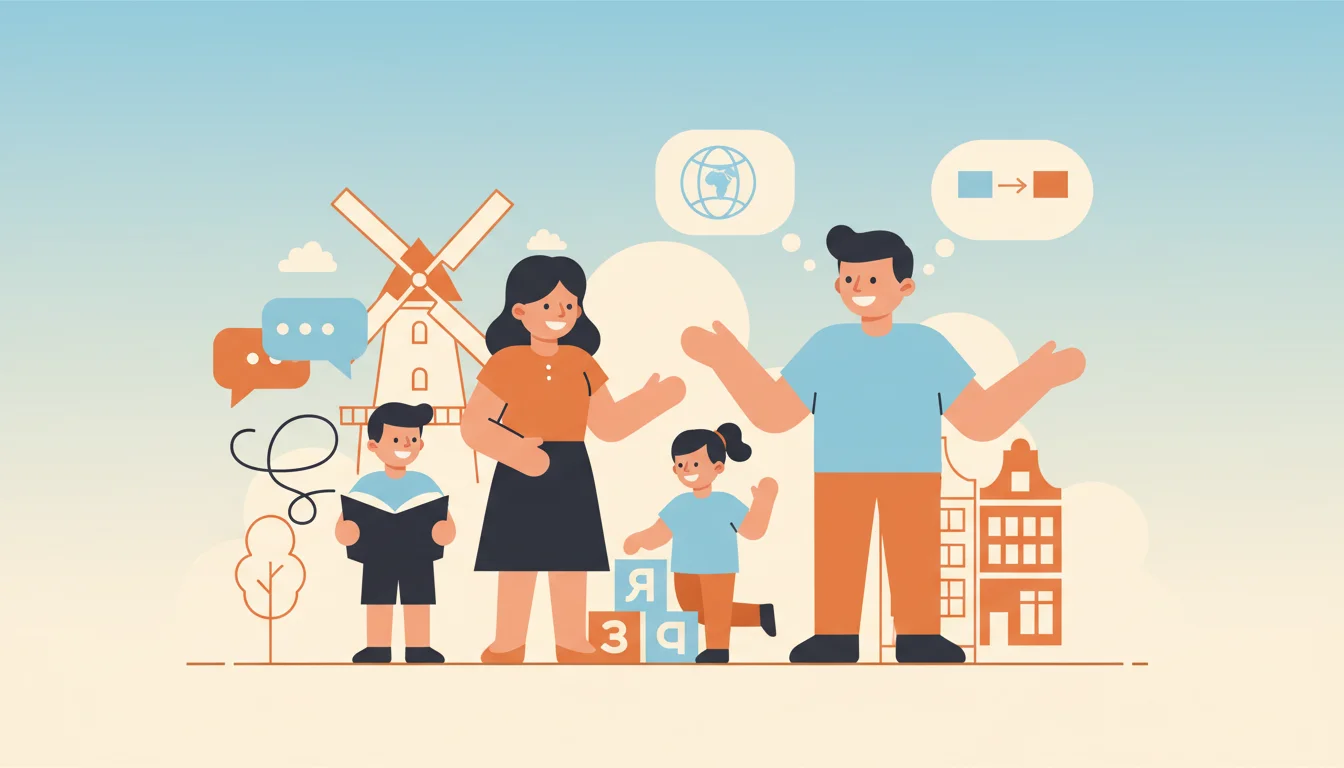
Moving to the Netherlands with children is an adventure that brings equal parts excitement and anxiety. As an expat parent, one of your biggest concerns is likely language. How will your children adapt to a Dutch-speaking environment? Will they lose their fluency in your native language? And perhaps the most daunting question of all: how will you keep up with them?
Raising bilingual (or multilingual) children is a gift that lasts a lifetime, but it requires patience, strategy, and a bit of cultural know-how. Whether you have toddlers starting at the kinderopvang or older children entering international school, here is your comprehensive guide to navigating the bilingual journey in the Low Countries.
Consistency is the golden rule of bilingual parenting. Before you worry about Dutch vocabulary, decide how you will handle languages at home. There are two popular methods that work well for expats in the Netherlands:
Whichever method you choose, stick to it. Children are incredibly adaptable, but they need clear boundaries to separate the languages in their developing brains. For parents, mastering Dutch reflexive verbs can be a great way to start building the same linguistic confidence your children are developing.
The Dutch school system is remarkably effective at integrating non-Dutch speakers. Most children start basisschool (primary school) the day after their 4th birthday.
If your child is young (under 6), total immersion in a regular Dutch school is often the best route. You might witness a "silent period" where they observe without speaking, followed by a sudden explosion of Dutch fluency. Within a year, their pronunciation will likely be indistinguishable from their native Dutch peers.
For older children (usually 6+), the Netherlands offers Taalklas (language class) or ISK (Internationale Schakelklas). These are specialized programs designed to teach Dutch intensively for a year before integrating the child into regular education. It’s a soft landing that prevents them from falling behind academically due to language barriers.
There is a common phenomenon among expat families: the children become fluent in Dutch within months, while the parents rely on English for years. While you can survive in the Netherlands with English, you cannot truly thrive as a parent without Dutch.
Why? Because you need to understand the nieuwsbrief (newsletter) from school, chat with other parents at the speelplein (playground), and understand what your child is saying when they shout, "Kijk uit, papa!"
This is where StroopTaal becomes your secret weapon. As a busy parent, you likely don't have time for evening classes three times a week. StroopTaal’s AI-powered personalized learning plans allow you to study in 10-minute bursts while waiting for swimming lessons to finish.
Additionally, using the app's real-life conversation practice scenarios, you can simulate chatting with a teacher or arranging a playdate, giving you the confidence to engage with the Dutch community around your child. Your kids will appreciate the effort, and it models a growth mindset for them. You might even find yourself mastering polite requests when speaking with teachers or other parents.
Don't treat Dutch as just a school subject; make it fun at home, too. Even if your home language is English or Japanese, you can dedicate specific times to Dutch media.
Don’t be alarmed if your child starts mixing languages in one sentence. You might hear, "Mama, I want to play on the glijbaan!" (slide).
This is called code-switching, and it is a sign of linguistic competence, not confusion. It means their brain is accessing vocabulary from both languages simultaneously. Instead of correcting them, simply repeat the sentence back in the target language: "Oh, you want to play on the slide? Okay, let's go to the slide."
Dutch social life for kids revolves around the speelafspraakje (playdate). Unlike in some cultures where parents organize elaborate supervised events, Dutch playdates are often spontaneous. A child might ask your child at school drop-off, "Kom je bij mij spelen?" (Are you coming to play at my place?).
Encourage these interactions! It is the fastest way for your child to learn slang and social norms. However, this also means you need to be comfortable speaking with the other parents to arrange pick-up times. If you are feeling unsure about your articles (is it de parent or het parent?), try a few rounds of StroopTaal’s De/Het article mastery games to sharpen your grammar before you head to the schoolyard. Understanding how to use Dutch plurals correctly will also help you feel more natural during these social interactions.
In the rush to integrate, don't let your native culture fade. Language is deeply tied to culture. Celebrate your own holidays, cook traditional food, and read books in your native language. A child who feels secure in their home identity will have more confidence to explore their new Dutch identity.
Raising bilingual kids in the Netherlands is a marathon, not a sprint. There will be days when they refuse to speak your language, and days when they refuse to speak Dutch. This is normal. Trust the process, utilize the excellent Dutch school system, and make sure you are learning alongside them.
By showing an interest in the Dutch language yourself, you bridge the gap between your home life and their school life. Ready to brush up on your Dutch so you can keep up with your bilingual kids?
Download StroopTaal today and start your daily streak!
Share this article:
Introduction: Navigating Dutch Housing Costs Moving to the Netherlands is an exciting adventure filled with stroopwafels, bicycles, and picturesque...
Read moreMastering the Art of "Boodschappen Doen" Moving to a new country involves relearning the simplest tasks, and for many expats in the Netherlands, the...
Read moreWelcome to the Netherlands! You’ve unpacked your boxes, tasted your first stroopwafel, and maybe even hopped on a bike. Now comes the inevitable...
Read more