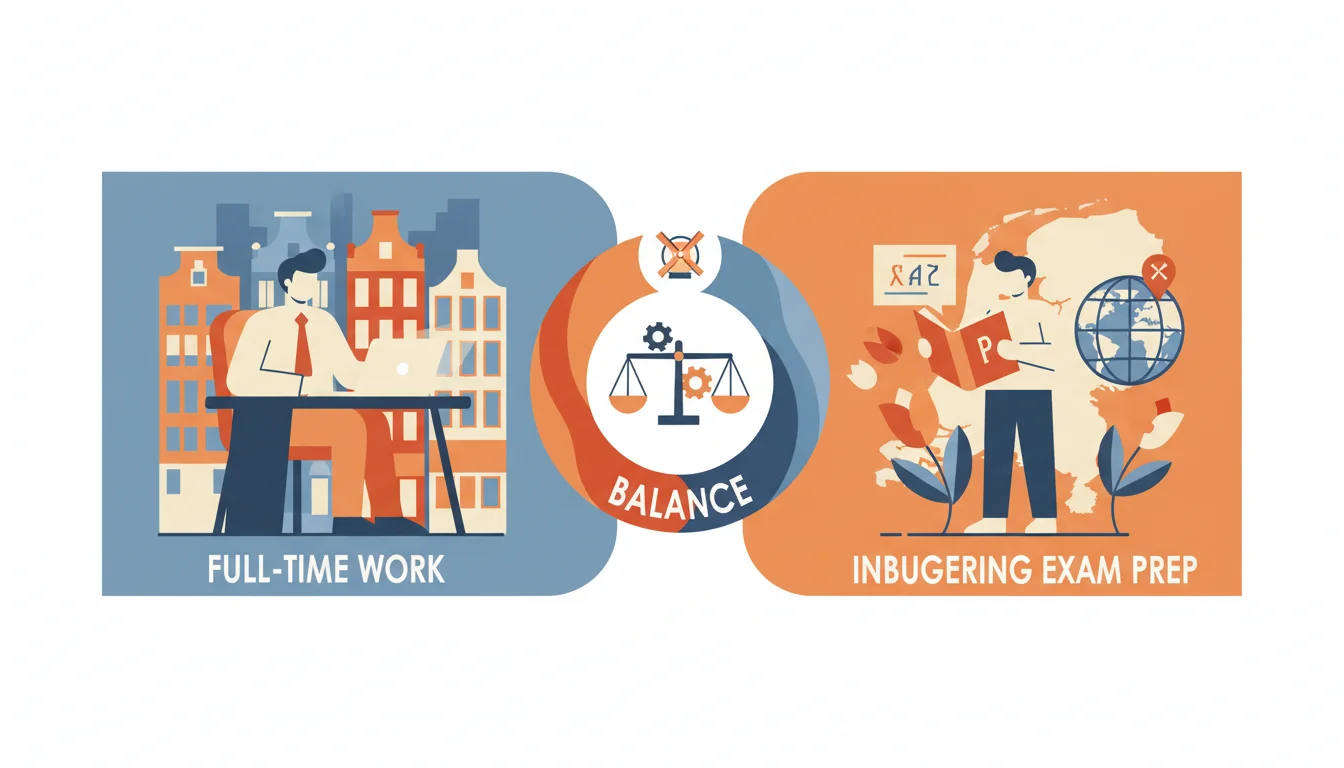
How to Balance Full-Time Work and Inburgering Exam Prep
The 9-to-5 Expat Dilemma The alarm rings at 7:00 AM. You rush through your morning routine, commute to the office (or your home desk), and spend the...
Read more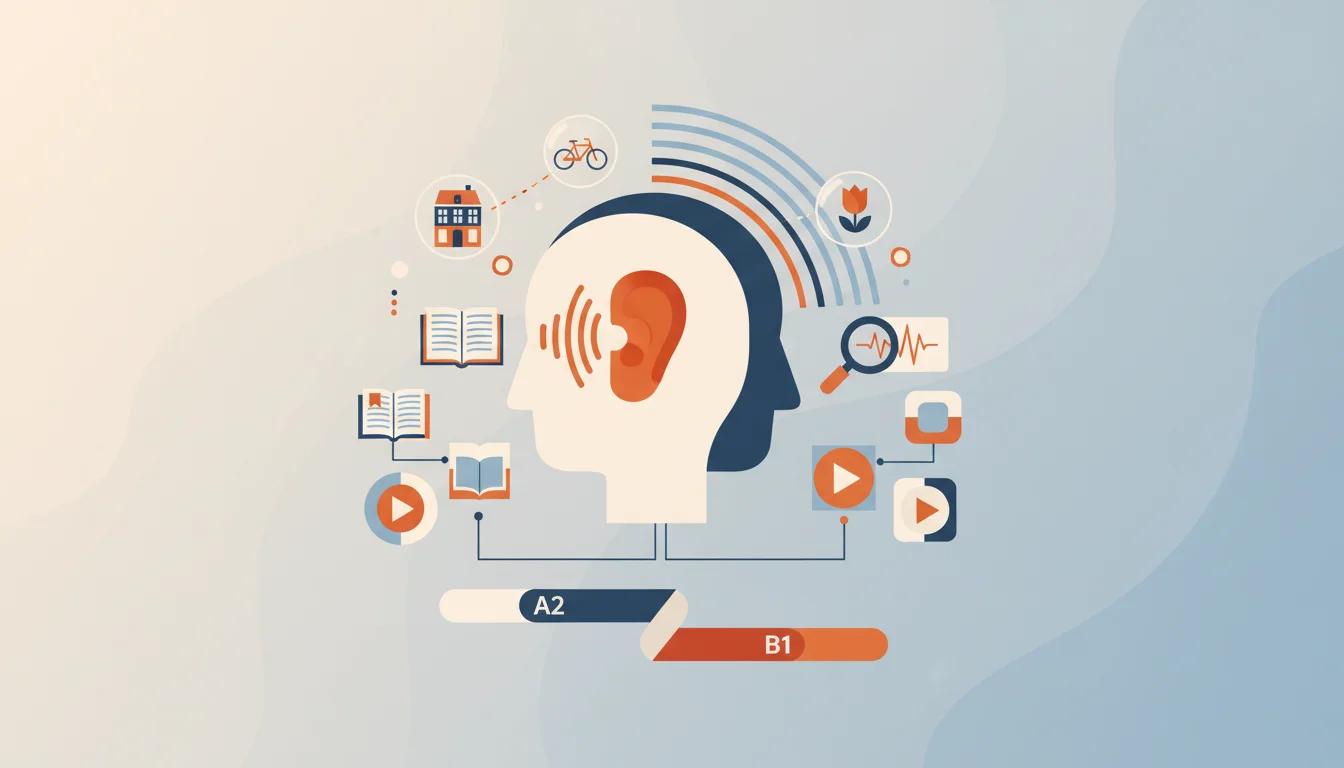
Is there anything more panic-inducing than hearing a Dutch sentence, understanding the first two words, and then watching the rest dissolve into a blur of guttural G's and rolling R's? If you are preparing for your Inburgering (Civic Integration) exam, you know exactly what we mean.
The Luisteren (Listening) component of the Inburgering exam is often cited as one of the most stressful sections. Unlike reading, where you can re-read a sentence, audio moves forward relentlessly. Whether you are taking the exam under the 2013 law (A2 level) or the newer 2021 law (B1 level), solid preparation is non-negotiable.
In this guide, we will break down the best resources to sharpen your ears, calm your nerves, and help you pass the Inburgering Listening exam with flying colors.
Before diving into resources, it is crucial to understand what is expected of you based on your exam level.
If you are aiming for A2, your goal is to get comfortable with basic sentence structures and common vocabulary.
The Dienst Uitvoering Onderwijs (DUO) website is your holy grail. They offer official practice exams that mimic the real interface you will see on test day. Do not just take these once; take them multiple times to get used to the format of the questions (multiple choice) and the cadence of the speakers.
Ad Appel is a household name in the Dutch learning community. His YouTube channel features excellent listening exercises specifically designed for the A2 level. The videos often display the text after the audio, allowing you to check your comprehension immediately.
This is a fantastic initiative by the Dutch public broadcaster. They offer programs with Dutch subtitles specifically for newcomers. Look for "Nieuws van de Week," which presents current events in simplified Dutch. It bridges the gap between textbook audio and real-life speech.
For those facing the B1 exam, you need exposure to unscripted, natural Dutch.
The Jeugdjournaal is the news broadcast for children. Don't let the target audience fool you; the language is spoken at a natural pace but explains complex topics clearly without unnecessary jargon. Watching this daily is one of the best habits you can form for B1 listening success.
Podcasts are perfect for training your ears to focus without visual cues—exactly what you need for the exam. Top recommendations include:
Just like with the A2 level, you must practice with official past exams. The College voor Toetsen en Examens releases past Programma I (B1) exams. These are harder than the standard Inburgering but are excellent for over-preparing. If you can handle these, the actual exam will feel like a breeze.
Passive listening (watching TV or listening to podcasts) is essential, but it has a flaw: it doesn't force you to interact. In the real exam, you have to process information and make a decision instantly.
This is where StroopTaal transforms your study routine. Our app isn't just about flashcards; it utilizes advanced AI to simulate real-life environments.
Having the right resources is half the battle. The other half is strategy.
On the exam, you will often see the question before the audio starts (or you have a brief moment). Read the question and the multiple-choice answers first. This primes your brain on what to listen for. Are you listening for a time? A location? A reason?
Dutch speakers use signal words to structure their sentences. Words like "omdat" (because), "maar" (but), and "hoewel" (although) usually indicate that the crucial information—the answer to your question—is coming up next or that the previous statement is being contradicted.
If you miss a word, let it go. Panic is your enemy. If you stop to think about what "gezelligheid" means, you will miss the next three sentences. Focus on the context and the overall message.
The Inburgering Listening exam is a hurdle, but it is one you can clear with consistent practice and the right tools. By combining official practice exams with engaging media like NOS Jeugdjournaal and utilizing active learning tools, you will train your ears to tune into Dutch frequencies effortlessly.
Ready to turn that passive listening into active mastery? Download StroopTaal today to practice with AI-powered conversations and personalized lessons that prepare you not just for the exam, but for life in the Netherlands.
Share this article:
The 9-to-5 Expat Dilemma The alarm rings at 7:00 AM. You rush through your morning routine, commute to the office (or your home desk), and spend the...
Read moreConquer the Blank Page: Your Guide to the Inburgering Writing Exam For many expats in the Netherlands, the Inburgeringsexamen (Civic Integration...
Read moreSo, You Want to Become a Dutch Citizen? Whether you have fallen in love with the canals of Amsterdam, the modern architecture of Rotterdam, or simply...
Read more