30% Ruling in the Netherlands: 2026 Expat Tax Guide
Moving to the Netherlands to advance your career is an exciting adventure. From cycling alongside historic canals to working in cutting-edge...
Read more
This article was written by AI and published by StroopTaal.
AI can get things wrong. For anything official, check the source it points to.
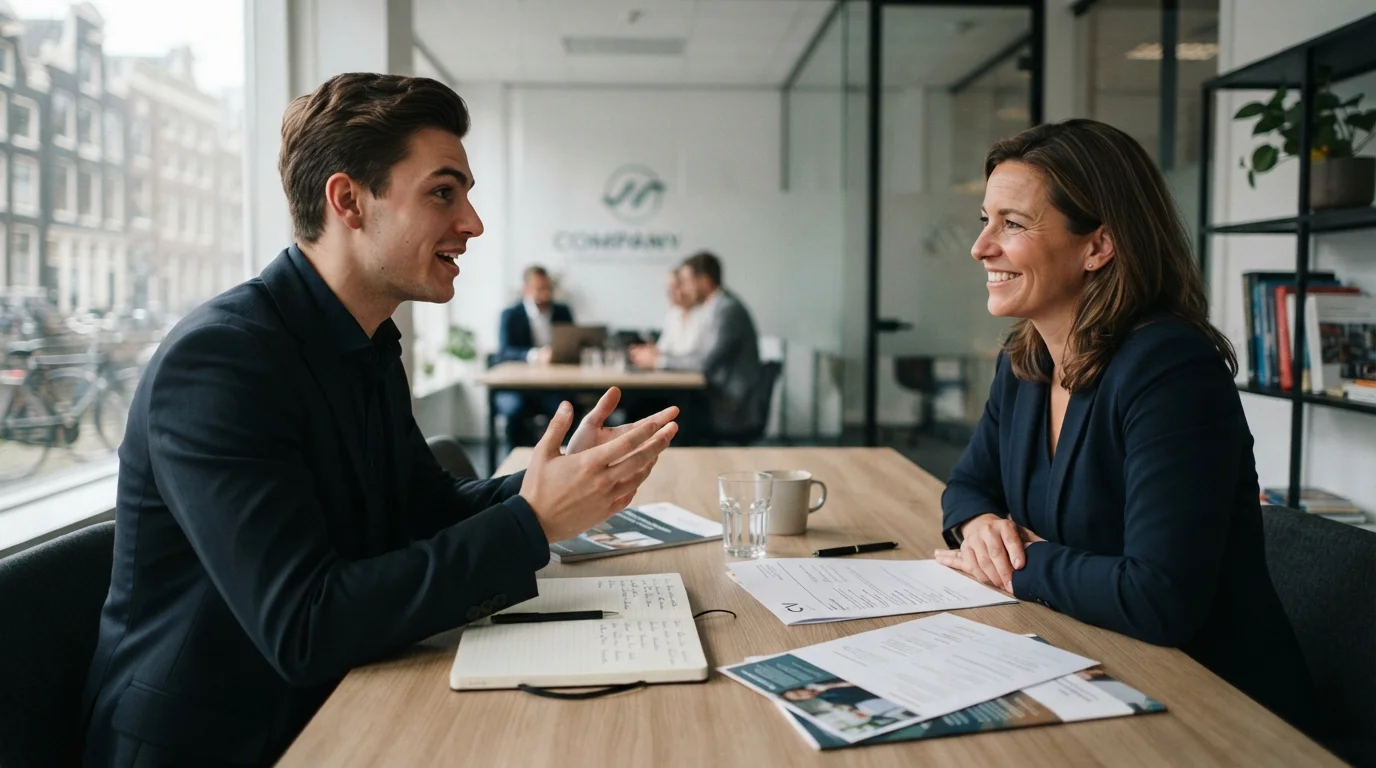
AI-generated image

Picture this: you have just started your first job at an office in Amsterdam or Rotterdam. During your first team sprint meeting, a junior intern raises their hand and openly challenges a strategic decision proposed by the department director. Instead of tension filling the room, the director smiles, nods thoughtfully, and asks, "Wat denk jij dat een beter alternatief zou zijn?" (What do you think would be a better alternative?).
For international professionals moving from hierarchical corporate environments in the UK, the US, Germany, France, or East Asia, this dynamic can feel disorienting. Where are the formal titles? Why is the CEO wearing sneakers and cycling to work? And why does every single decision feel like an extensive round-table negotiation?
Welcome to Dutch office culture, a working environment built on radical egalitarianism, transparency, and a relentless quest for consensus known as the Polder Model. Understanding how equal decision-making functions in the Dutch workplace is not merely an interesting sociological observation—it is vital to thriving in your career, gaining the respect of your colleagues, and navigating day-to-day office interactions in the Netherlands.
To understand why your Dutch manager values your opinion just as much as their own, you have to look back several centuries into Dutch history. Much of the Netherlands lies below sea level. Historically, preventing devastating floods required continuous cooperation among farmers, nobles, townspeople, and merchants.
Regardless of social rank, everyone had a shared stake in keeping the dikes intact. If one person neglected their section of the levee, the entire community drowned. This collective necessity gave birth to the Polder Model (het poldermodel)—a decision-making framework centered on consensus, pragmatism, and mutual compromise.
Today, this historical legacy translates into a deeply ingrained workplace philosophy: everyone deserves a seat at the table, and no single person holds all the answers. Authority is derived from competence, clear communication, and the ability to build consensus rather than an executive job title.
The Dutch approach to work differs significantly from traditional top-down management structures. Here are the core characteristics you will encounter in virtually every Dutch organization:
Dutch companies boast some of the flattest organizational structures in the world. Executives rarely isolate themselves in corner offices behind layers of executive assistants. Instead, open-plan workspaces are the norm, and leaders sit alongside their teams.
In a Dutch office, silence during a strategic discussion is not interpreted as polite deference; it is often perceived as a lack of engagement or critical thinking. Employees at all levels are expected to contribute insights, voice concerns, and actively suggest improvements (meedenken).
If you are preparing for job interviews, being ready to demonstrate proactive problem-solving is critical. Understanding these cultural expectations before acing your Dutch job interview will help you frame your past achievements around teamwork, collaboration, and individual initiative.
Because decisions require consensus and broad buy-in (draagvlak), the Dutch love meetings. You will quickly become familiar with the term overleggen (to deliberate or consult). While this ensures that everyone supports a strategy once it is finalized, it can sometimes make initial decision-making feel slow to outsiders.
Meetings are collaborative arenas where ideas are stress-tested in real time. Mastering essential Dutch phrases for business meetings allows you to articulate your viewpoints confidently and follow the fast-paced flow of discussion.
One of the biggest hurdles expats face in the Netherlands is the infamous Dutch directness (bespreekbaarheid). Dutch professionals value clarity and efficiency above diplomatic fluff. While an Anglo-American manager might soften criticism by using a "compliment sandwich," a Dutch colleague will get straight to the point.
If your report contains an error, a Dutch coworker might say bluntly: "Dit klopt niet, je moet sectie twee herschrijven." (This is incorrect, you need to rewrite section two). To someone unfamiliar with the culture, this can sting and feel like an aggressive reprimand. However, in the Dutch mindset:
Equally important, directness is a two-way street. Your manager expects you to be just as candid with them. If a deadline is unrealistic or a project scope is flawed, you are expected to raise the flag immediately rather than struggle in silence.
How does equal decision-making actually lead to actionable results? The process of polderen relies on a series of unwritten rules:
Equal decision-making and flat social structures are not confined to formal boardrooms; they permeate everyday workplace rituals throughout the Netherlands.
The office coffee machine (de koffieautomaat) is the great equalizer. Here, interns chat casually with C-suite executives about weekend plans, sports, or family. When lunch rolls around, Dutch workers typically gather around communal tables to eat simple cheese sandwiches (broodjes kaas) brought from home in modest lunchboxes.
Many offices also partake in a daily lunchwandeling (lunch walk), where teams spend 20 minutes walking outdoors together regardless of the weather. These informal interactions break down departmental silos and foster trust, making business negotiations far smoother.
On Friday afternoons around 16:30, work winds down for the Vrijdagmiddagborrel, affectionately shortened to Vrijmibo. Colleagues gather for beers, sodas, and hot snacks like bitterballen. It is an opportunity to socialize without hierarchy, unwind, and build genuine personal connections.
While many multinational offices in Amsterdam, Utrecht, and Eindhoven operate primarily in English, learning Dutch remains the ultimate key to truly integrating into the workplace. When conversations shift to informal banter, strategic nuance, or company-wide town halls, speaking the local language shows commitment and mutual respect.
If you want to feel confident in high-stakes office interactions—whether you are voicing an opinion during a strategy session or negotiating your compensation in the Netherlands—dedicated practice makes all the difference.
With StroopTaal, you can accelerate your business Dutch using AI-powered personalized learning plans tailored specifically to professional scenarios. Practice realistic workplace conversations, receive instant pronunciation feedback, and master the cultural subtleties of Dutch office communication directly from your phone.
To summarize, here are actionable strategies to help you excel in an egalitarian Dutch working environment:
The Dutch office culture of equal decision-making is empowering once you understand its mechanics. By stripping away intimidating corporate pretension and valuing every team member's perspective, Dutch companies foster an environment of high trust, innovation, and psychological safety.
By embracing directness, actively contributing to team consensus, and developing your Dutch language skills, you will not only adapt to working in the Netherlands—you will flourish.
Ready to level up your professional Dutch and feel right at home in any meeting? Start practicing realistic workplace dialogues and expand your professional vocabulary with StroopTaal today!
Share this article:
Moving to the Netherlands to advance your career is an exciting adventure. From cycling alongside historic canals to working in cutting-edge...
Read moreSecuring an invitation to a job interview in the Netherlands is an exciting milestone. Whether you are an expat looking to transition into a local...
Read moreIf you are planning to study in the Netherlands, relocate as an expat, or help your children navigate their post-secondary options, you will quickly...
Read more