30% Ruling in the Netherlands: 2026 Expat Tax Guide
Moving to the Netherlands to advance your career is an exciting adventure. From cycling alongside historic canals to working in cutting-edge...
Read more
This article was written by AI and published by StroopTaal.
AI can get things wrong. For anything official, check the source it points to.
AI-generated image
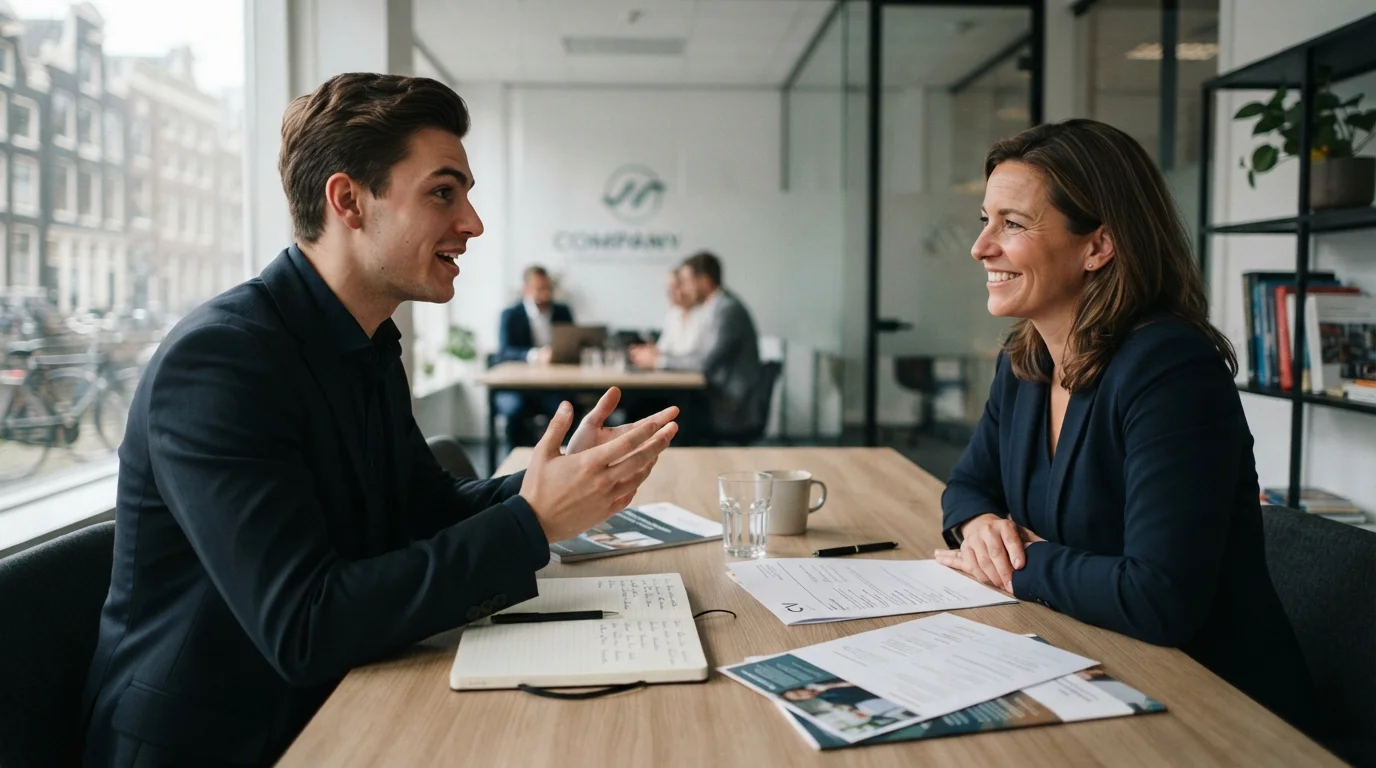
Securing an invitation to a job interview in the Netherlands is an exciting milestone. Whether you are an expat looking to transition into a local company, a skilled migrant stepping into the Dutch corporate ecosystem, or an international graduate launching your career, sitting down with a Dutch hiring manager can feel both thrilling and daunting. While many multinational companies in the Randstad operate predominantly in English, demonstrating proficiency—or even genuine effort—in professional Dutch gives you an undeniable competitive edge.
Dutch workplace culture is famously egalitarian, direct, and pragmatic. Recruiters value authentic communication, clear self-awareness, and constructive dialogue over flowery rhetoric. In this comprehensive guide, we will unpack the unique dynamics of Dutch interview etiquette and explore ten indispensable business Dutch phrases that will help you articulate your value, build rapport, and interview with confidence.
Before memorizing phrases, it is crucial to understand the cultural mindset of Dutch interviewers. In the Netherlands, an interview is not an interrogation where you simply recite your achievements; it is a collaborative conversation (een tweegesprek) designed to see if there is mutual alignment on values, working styles, and practical expectations.
The famous Dutch proverb "Doe maar gewoon, dan doe je al gek genoeg" (Just act normal, that is crazy enough) heavily influences hiring. Exaggeration, boastful claims, or overly aggressive self-promotion are seen as red flags. Dutch interviewers prefer concrete examples, honest reflections on areas for improvement, and a grounded explanation of what you can deliver.
Dutch organizations typically feature flat organizational structures. You are expected to ask questions, challenge ideas politely, and treat your interviewer as an equal colleague rather than a distant authority figure. For official labor guidelines and workplace standards, you can consult Government.nl on working in the Netherlands.
Being five minutes late without prior notice can derail an otherwise stellar profile. In the Netherlands, being on time means arriving 5 to 10 minutes early. Dress neatly according to industry norms—business casual is common in tech and creative sectors, while formal attire remains standard in finance and law.
If you have already mastered crafting an effective Dutch cover letter, your next step is translating that written professionalism into spoken eloquence.
Here are ten high-impact, professional phrases divided across the stages of an interview—from the opening handshake (or warm greeting) to closing remarks.
Pronunciation: Fayn om KEN-nis tuh MAH-kuhn
When to use: Right at the start when greeting the interviewer, whether in person or over a video link.
Why it matters: It strikes the perfect balance between polite professionalism and natural warmth. While "Aangenaam" is also correct, "Fijn om kennis te maken" sounds slightly more modern and personable in contemporary office environments.
Pronunciation: buh-DANKT voor duh OYT-noh-dee-ghing voor dit ghuh-SPREK
When to use: As you sit down and settle into the conversation.
Why it matters: Expressing appreciation for the opportunity demonstrates enthusiasm and professional manners. It smoothly transitions the interaction from small talk about the weather or commute into the core agenda of the meeting.
Pronunciation: In mayn VOR-ee-guh FUNK-see vas ik vur-ant-WOOR-duh-luk voor...
When to use: When describing your background, career trajectory, and past projects.
Why it matters: This standard introductory phrase allows you to frame your key responsibilities cleanly. Follow it with specific nouns and measurable achievements:
Pronunciation: Mayn STER-kuh PUN-tuhn zayn DAHT-krakht en op-LOS-sings-ghuh-rikht DENG-kuhn
When to use: When asked the classic question: "Wat zijn jouw sterke eigenschappen?" (What are your strengths?)
Why it matters: Dutch managers value people who take initiative and focus on practical solutions rather than dwelling on problems. Words like daadkracht (decisiveness/drive) and oplossingsgericht (solution-oriented) resonate strongly in Dutch corporate culture.
Pronunciation: Ik hep ROY-muh er-VAH-ring met...
When to use: To validate your technical or domain expertise.
Why it matters: The adjective ruime (ample/extensive) conveys authority without sounding arrogant. You can pair this phrase with software tools, methodologies, or leadership skills, such as "Ik heb ruime ervaring met data-analyse en stakeholdermanagement." Expanding your workplace lexicon with Dutch vocabulary for business meetings will help you elaborate on these topics effortlessly.
Pronunciation: Wat may AHN-spraykt in DAY-zuh rol is duh RÖYM-tuh voor AY-ghuhn in-ee-tsyah-TEEF
When to use: When discussing why you applied for the position.
Why it matters: Autonomy is a cornerstone of Dutch organizational structure. Employers want self-starters who don't wait for explicit instructions at every turn. Highlighting your desire for eigen initiatief signals that you thrive in proactive environments.
Pronunciation: Ik funk-syo-NAYR zo-WEL zelf-STAN-dugh als in TEEM-vur-bant OYT-stay-kuhnt
When to use: When asked about your work style, collaboration habits, or preferred team dynamics.
Why it matters: The Dutch consensus model (*het poldermodel*) requires strong teamwork, consultation, and alignment. However, remote and hybrid work also demand self-reliance. This phrase shows you are versatile and balanced.
Pronunciation: Hoo zeet duh SAH-muhn-wer-king BIN-nuhn het teem ayr-OYT?
When to use: During the Q&A segment towards the end of the interview.
Why it matters: Asking questions proves that you are actively evaluating the company's culture. Inquiring about team collaboration shows that you value interpersonal dynamics and harmony in daily operations.
Pronunciation: Kunt oo eets vur-TEL-luhn OH-vur duh DOOR-grooy-moh-ghuh-luk-hay-duhn?
When to use: When exploring future development and long-term tenure.
Why it matters: Dutch employers prefer candidates who view the position as a long-term commitment. Inquiring about doorgroeimogelijkheden shows ambition and foresight without being overly presumptuous.
Pronunciation: Ik kayk oyt nahr het vur-VOLGH van duh sol-lee-see-TAH-see-proh-suh-dyoo-ruh
When to use: As your closing statement when exchanging final goodbyes.
Why it matters: It closes the interview with professional optimism. It demonstrates confidence in your application while respecting the established timeline of the hiring committee.
Memorizing phrases in isolation is helpful, but speaking them naturally under interview pressure requires dedicated interactive practice. When adrenaline spikes during an interview, your brain relies heavily on muscle memory and instinctive recall.
To master your delivery, consider adopting these actionable preparation strategies:
After your interview wraps up, send a short, polite thank-you email (een bedankmail) within 24 hours. Reiterate your enthusiasm for the position and reference a specific talking point discussed during the interview to leave a lasting impression.
Once you receive a positive offer, you will enter the terms and compensation stage. Make sure to prepare beforehand by studying our guide on negotiating your salary in the Netherlands so you can navigate secondary benefits, vacation allowances (vakantiegeld), and pension schemes effectively.
Acing a Dutch job interview is not about speaking flawless C2-level Dutch from day one; it is about demonstrating clear thinking, professional accountability, and the enthusiasm to integrate into your new team. By deploying these 10 essential business Dutch phrases and embracing the open, pragmatic spirit of Dutch corporate communication, you will stand out as a proactive, capable, and culturally attuned candidate.
Start practicing your interview responses today, refine your pronunciation with interactive tools like StroopTaal, and step into your next interview ready to land your dream role in the Netherlands. Veel succes met je sollicitatiegesprek!
Share this article:
Moving to the Netherlands to advance your career is an exciting adventure. From cycling alongside historic canals to working in cutting-edge...
Read moreIf you are planning to study in the Netherlands, relocate as an expat, or help your children navigate their post-secondary options, you will quickly...
Read moreThe Netherlands has cemented its reputation as one of Europe's premier tech capitals. From the bustling fintech and SaaS ecosystem in Amsterdam to...
Read more