How to Find a Rental in Utrecht: 5 Tips for Expats in 2026
Welcome to Utrecht: The Beating Heart of the Netherlands So, you are planning to move to Utrecht in 2026. Congratulations! With its iconic Dom Tower,...
Read more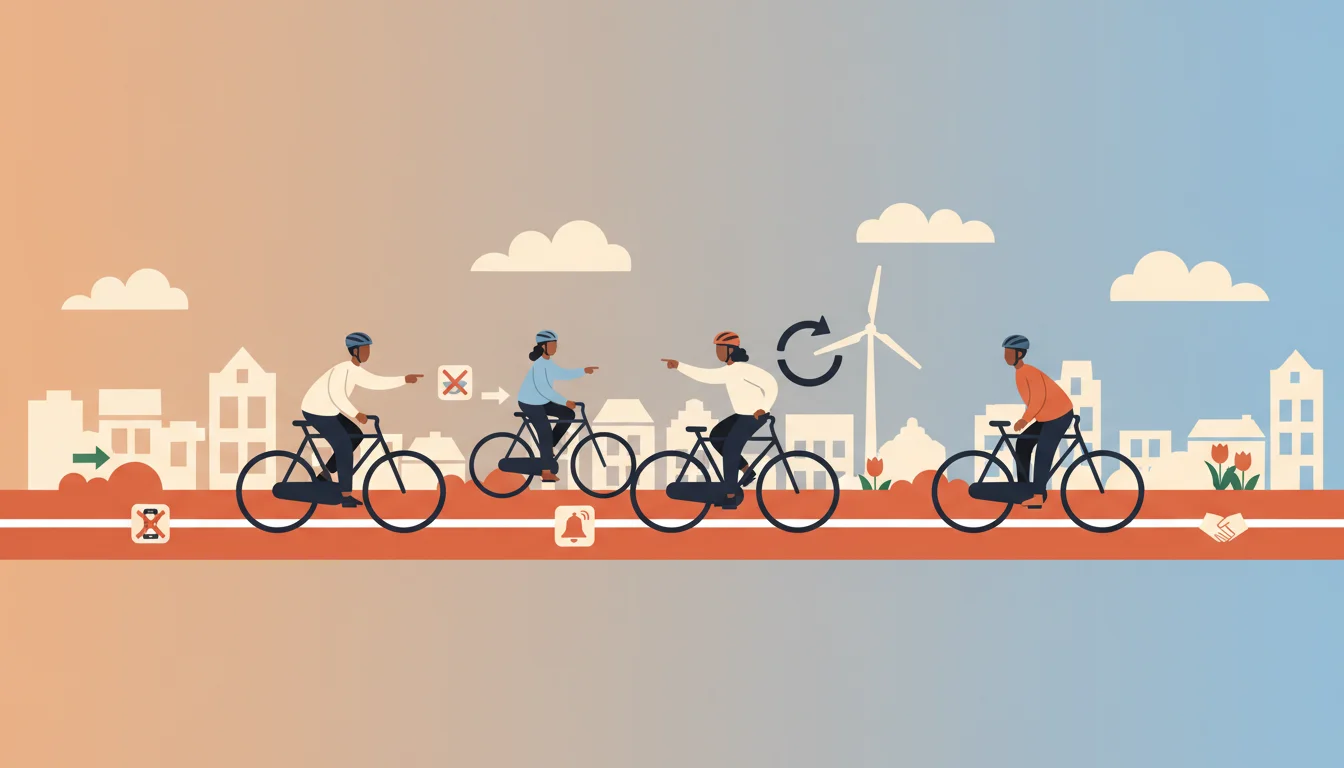
Moving to the Netherlands comes with many exciting milestones: eating your first stroopwafel, navigating the complex housing market, and, perhaps most importantly, buying your very first Dutch bicycle (fiets). With over 23 million bicycles for a population of just 17 million people, cycling is not just a mode of transportation in the Netherlands—it is a way of life.
However, for expats and new residents, stepping onto the iconic red asphalt of the Dutch fietspad (bike lane) for the first time can be an intimidating experience. The locals seem to glide effortlessly through intersections, balancing groceries, holding umbrellas, and sometimes even towing three children in a wooden box, all while maintaining a brisk pace.
To survive and thrive on two wheels, you need to understand both the strict legal traffic laws and the unwritten social codes of the bike lane. This comprehensive guide will walk you through essential Dutch cycling etiquette, the rules of the fietspad, and everything you need to know to cycle safely and confidently like a true local.
While official traffic laws are crucial, the unwritten rules of Dutch cycling etiquette are what keep the chaotic morning commute flowing smoothly. Mastering these habits will prevent you from frustrating the locals and keep you safe.
Just like driving on the highway, the golden rule of the fietspad is to stay as far to the right as safely possible. The left side of the bike lane is strictly reserved for overtaking. If you ride slowly in the middle of the path, you will quickly hear the aggressive ringing of a bicycle bell behind you. Always check over your left shoulder before overtaking someone else to ensure a faster cyclist (or a speedy e-bike) isn't already trying to pass you.
Predictability is safety. Whenever you intend to make a turn, you must indicate your direction by pointing with your hand. You don't need to hold your arm out for a long time; a clear, firm point for a few seconds before the turn is sufficient. Failing to signal is one of the quickest ways to cause a collision, especially during rush hour.
If you need to check your phone, adjust your scarf, or figure out Google Maps, never slam on your brakes and stop in the middle of the fietspad. Signal, pull over to the right, and step completely off the bike lane onto the sidewalk to handle your business. Stopping unexpectedly is a major faux pas in Dutch cycling etiquette.
The Netherlands has a highly developed infrastructure designed specifically to protect cyclists, but it only works because everyone follows a specific set of rules. You can review the official bicycle rules from the Dutch government, but here are the most critical ones you will encounter daily.
One of the most important road markings you will learn to recognize is the "shark teeth" (haaientanden). These are large white triangles painted on the road. If the points of the triangles are pointing towards you, you must yield (give right of way) to crossing traffic. If the points are facing the other traffic, you have the right of way. Never hesitate when you have the right of way, as Dutch drivers and cyclists expect you to keep moving.
At an unmarked intersection—meaning there are no traffic lights, signs, or shark teeth—the default rule is that traffic coming from your right has the right of way. This applies to cars, scooters, and other bicycles. If you plan on getting behind the wheel of a car later, you'll notice many of these priority rules overlap. You can read more about navigating the roads and getting a Dutch driver's license to fully understand the dynamic between cyclists and motorists.
Bicycles have their own dedicated traffic lights (often shaped like a little bicycle). You must obey these lights. Running a red light can result in a hefty fine. However, there is a common exception: look for a small blue sign under the traffic light that says "Rechtsaf voor fietsers vrij". This translates to "Right turn for cyclists free," meaning you are legally allowed to turn right even if the light is red, provided you yield to pedestrians and other traffic.
Roundabouts can be tricky because the rules change depending on whether you are inside or outside the city limits (bebouwde kom). Generally, inside the city, cyclists on the roundabout have the right of way over cars entering or exiting. Outside the city, cyclists usually have to yield to cars. Always look for the shark teeth to be sure!
Before you hit the busy intersections, brushing up on your Dutch traffic vocabulary is a game-changer. With StroopTaal, you can use our AI-powered personalized learning plans and spaced repetition features to master essential cycling terms quickly. Here are a few words you must know:
Practicing these words through StroopTaal's interactive dialogue games will prepare you for practical scenarios, like explaining to a bike mechanic that you have a lekke band.
To fully embrace the rich history of cycling in the Netherlands, you need the right steed. Most expats start with a second-hand bike from a local shop (fietsenmaker) or via Marktplaats (the Dutch equivalent of Craigslist).
By law, your bicycle must be equipped with a working white light on the front and a red light on the back when cycling at night or in poor visibility. You also need red and yellow reflectors on your tires and pedals. The police regularly set up checkpoints during the dark winter months, and riding without lights will result in an immediate fine of around €65.
Furthermore, bike theft is a national pastime in the Netherlands. You must invest in two high-quality locks: a ring lock (ringslot) that goes through the back wheel, and a heavy chain lock (kettingslot) to attach your bike frame to an immovable object like a fietsenrek.
The Dutch police do not joke around when it comes to traffic safety on the fietspad. Aside from cycling without lights, one of the most heavily penalized offenses is using your mobile phone while cycling. Holding an electronic device while riding will cost you a fine of €150. If you need to navigate, buy a handlebar mount for your phone.
If you get caught holding your phone or running a red light, the fine will be sent to your registered address by the Centraal Justitieel Incassobureau (CJIB). You can usually log in online to pay or appeal the fine, which is just one of many reasons why you should prioritize setting up your DigiD account as soon as you arrive.
Despite the excellent infrastructure, minor scrapes and bumps do happen, especially when the fietspad is slippery with autumn leaves or winter ice. If you have a collision, check if everyone is okay, move out of the way of traffic, and exchange contact information if there is property damage.
If you do take a minor tumble on the wet pavement, don't panic. For non-emergencies, you'll need to know how to navigate the healthcare system. Check out our guide on contacting your local family doctor (huisarts) to ensure you're registered before an accident happens.
You cannot simply leave your bike anywhere. In major cities like Amsterdam, Utrecht, and Rotterdam, there are strict parking zones. Always use designated bike racks (fietsenrekken) or indoor parking garages (fietsenstallingen), many of which are free for the first 24 hours.
If you park your bike in a "No Parking" zone, outside of a designated rack in a busy area, or leave it abandoned for weeks, the municipality (gemeente) will cut your lock and tow your bike to the local bike depot (fietsdepot). Retrieving it usually costs around €25 and requires you to prove ownership with your bike key.
Understanding Dutch cycling etiquette is about more than just getting from point A to point B; it is a vital part of integrating into Dutch society. It shows respect for the local culture and demonstrates that you are making an effort to adapt to the Dutch way of life.
If you're preparing for your integration exams, understanding Dutch cycling culture is a must. StroopTaal offers dedicated cultural lessons about Dutch life and customs, alongside interactive dialogue games where you can practice real-life scenarios—like buying a bike, negotiating on Marktplaats, or getting your brakes repaired—with our AI.
Conquering the Dutch fietspad is a rite of passage for every expat. While the speed and volume of cyclists might seem overwhelming during your first few weeks, following these rules of etiquette will soon have you pedaling with confidence. Remember to stay right, signal your intentions, obey the shark teeth, and never use your phone while riding.
Want to feel even more confident in the Netherlands? Mastering the language is the next step. Download the StroopTaal app today to start building your Dutch vocabulary, practicing real-life conversations with our AI, and preparing for your inburgering exams. Veel fietsplezier! (Happy cycling!)
Share this article:
Welcome to Utrecht: The Beating Heart of the Netherlands So, you are planning to move to Utrecht in 2026. Congratulations! With its iconic Dom Tower,...
Read moreNavigating the Dutch Healthcare System: A Guide to the Huisarts Moving to the Netherlands brings a wave of exciting changes: cycling everywhere,...
Read moreIntroduction to the Dutch VvE Buying property in the Netherlands is an exciting milestone for any expat. Whether you are dreaming of a canal-side...
Read more