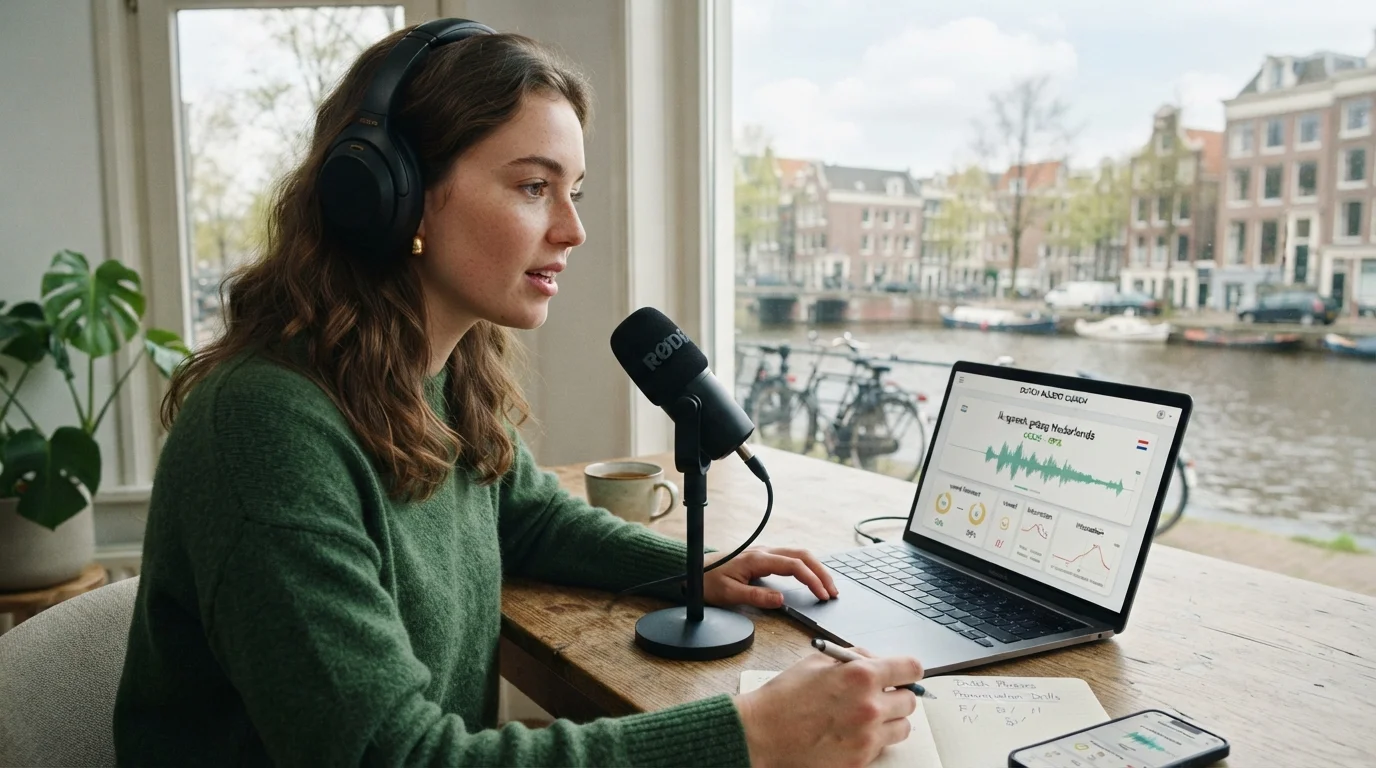
StroopTaal vs LingQ: Which App Accelerates Dutch Reading?
Reading Dutch fluently is often the tipping point for expats and language learners living in the Netherlands. At first, you might get by relying on...
Read more
Expanding your Dutch vocabulary is often the single biggest hurdle between surviving on English in the Randstad and feeling genuinely at home in the Netherlands. Whether you are deciphering letters from the Belastingdienst, ordering at a busy bakery, or aiming to pass the civic integration exams, memorizing a list of words on paper rarely cuts it.
Modern language learners turn to vocabulary apps to turn daily commute minutes into active study sessions. However, vocabulary apps are not all built with the same philosophy. While some turn learning into rapid-fire micro-games, others lean heavily into video clips of locals, and others focus specifically on the functional vocabulary needed to navigate life and exams in the Netherlands. In this comparison guide for 2026, we pit three leading contenders against each other: Drops, Memrise, and StroopTaal.
Dutch presents unique obstacles that general flashcard apps often struggle to handle. If you memorize isolated words without their grammatical baggage, you will quickly hit a wall. Dutch vocabulary challenges include:
To evaluate which app serves expats and learners best, we looked at how each app structures retention, handles grammatical context, and prepares you for real-world Dutch life.
Drops takes an aesthetic, minimalist approach to vocabulary. Built primarily around 5-minute sessions, it pairs minimalist vector illustrations with Dutch terms. You swipe, match, and tap drops of vocabulary into categories without typing out complex sentences or dissecting grammar.
Drops excels as a casual visual dictionary. It builds basic familiarity with food items, objects, and foundational nouns, making it popular for complete beginners who want low-friction daily engagement.
Memrise has long relied on spaced repetition algorithms combined with short video clips of native speakers uttering conversational phrases. Rather than purely abstract graphics, Memrise lets you hear variations in Dutch accents and everyday cadence.
Its strength lies in listening comprehension for conversational snippets and short colloquialisms, though its coverage of systematic Dutch grammar and formal integration topics can vary depending on whether you choose official courses or community decks.
Unlike global multi-language platforms, StroopTaal is engineered specifically for Dutch as spoken in the Netherlands, taking learners from complete beginner (A0) all the way to advanced C1. Its vocabulary acquisition is integrated into practical daily life scenarios, work situations, and exam paths.
In StroopTaal, words and mistakes return in spaced reviews right as memory begins to fade. The Words tab features an integrated dictionary, a word of the day, digital flashcards, dedicated noun-gender games to master de versus het, and word puzzles. Learners can save any word they hear or look up in the app to practice later, while Premium users can photograph real-world Dutch text—such as official mail, menus, or street signs—to extract and save vocabulary directly.
How an app presents new words dictates how effectively your brain stores them.
Drops strips away all text translations once an item is introduced, relying solely on graphic icons. While this builds direct association between an image and a Dutch word, it falters with abstract concepts, nuanced verbs, and legal or governmental terms. Drops also omits noun genders on most main screens, which can lead learners to memorize nouns without their vital definite articles.
Memrise introduces words using video cards, audio prompts, and multiple-choice or typing drills. The presence of authentic speaker videos helps connect Dutch pronunciation with mouth movements. However, phrases are often learned as set idioms rather than grammatical components, which can leave learners unsure how to adapt the words into their own original sentences.
StroopTaal presents vocabulary through a sequential path of short lessons. Rather than isolated cards, words are presented through multiple exercise types: typing, arranging words in order, fill-in-the-blanks, dictation, spotting mistakes, and speaking. Immediate explanations show why an answer is right or wrong.
Grammar is integrated directly with tips, examples, and conjugation tables, so when you learn a verb, you see how it behaves in practical use. Every unit concludes with a dialogue from daily life, cementing newly introduced words within a believable Dutch scenario.
Learning a word once is easy; recalling it two months later under pressure is the real challenge. You can read more about how cognitive timing impacts language acquisition in our guide on spaced repetition for Dutch vocabulary.
If you plan to live in the Netherlands or satisfy residency requirements outlined by the Government of the Netherlands, generic vocabulary will only get you so far. Daily life demands understanding administrative terminology, municipal procedures, and workplace jargon.
Drops focuses primarily on thematic everyday nouns (food, travel, objects). It rarely touches upon the civic language required for a DigiD notification or a health insurance claim.
Memrise offers broader conversational coverage, but unless you hunt for custom community lists, its official paths do not follow the structured requirements of Dutch integration programs.
StroopTaal focuses exclusively on life in the Netherlands. Its vocabulary covers practical situations such as visits to the doctor, conversations at municipal counters, and workplace scenarios. For grammatical accuracy, the Words tab includes a dedicated game for learning which article (de or het) pairs with a noun—a critical detail for proper sentence structure. Furthermore, StroopTaal offers specific exam practice modules for the inburgering exams (A2 and B1) and the Staatsexamen NT2 (B1 and B2), allowing learners to practice reading, writing, listening, speaking, and KNM (Knowledge of Dutch Society) with timed exercises and AI readiness scoring.
The ultimate flaw of many vocabulary flashcard tools is the "passive recognition trap." You recognize the word when you see it on a screen, but you cannot produce it when a colleague asks you a question.
Drops offers no spoken conversation practice; pronunciation drills are limited to listening to short recorded audio clips.
Memrise provides audio-visual exposure through short native clips, which improves ear tuning, but conversational practice is limited.
StroopTaal features interactive listening scenes that place you in real-world scenarios—such as a phone call or an announcement at a train station. After answering comprehension questions, you can act out the situation yourself. For active speech production, StroopTaal includes Taalmaatje, an AI conversation partner. Users call Taalmaatje to speak Dutch out loud about daily topics or specific roleplay scenarios like a job interview or doctor visit. Pronunciation practice scores spoken words and sentences to pinpoint areas for improvement, bridging the gap between vocabulary recognition and verbal fluency. To explore how to train your ear further, check out our guide on understanding spoken Dutch in real situations.
Here is how the three platforms stack up across core vocabulary-building features:
Regardless of which tool you add to your routine, adopt these study habits to ensure words stick permanently:
If you are a complete beginner looking for an aesthetic, casual way to pick up 100 basic nouns without any grammar overhead, Drops is a fun, low-pressure companion. If you learn best by watching human expressions and listening to varied native accents in bite-sized phrases, Memrise provides strong audiovisual flashcard sets.
However, if you live in the Netherlands, need to tackle the nuances of noun genders, want to capture vocabulary directly from Dutch mail and menus, or are working toward civic integration and work-ready fluency, StroopTaal provides the most comprehensive, context-driven platform. With structured lesson paths from A0 to C1, spaced reviews, dedicated word games, and voice practice via Taalmaatje, it equips you to use your vocabulary where it counts most: in real Dutch daily life.
Rules, fees and dates change. Check the current version on the official pages before you act.
Share this article:
Reading Dutch fluently is often the tipping point for expats and language learners living in the Netherlands. At first, you might get by relying on...
Read moreFew moments in language learning feel more deflating than ordering a coffee in Amsterdam or Utrecht, only to have the barista respond instantly in...
Read moreIf you commute to work or school in the Netherlands, you are already familiar with the rhythm of Dutch public transport: stepping onto a...
Read more