How to Prepare for the Dutch Inburgering B1 Speaking Exam in September
Taking the Inburgering B1 Speaking Exam (Spreekvaardigheid) is one of the most significant milestones in your Dutch integration journey. If your test...
Read more
This article was drafted by AI and edited by a person before it was published.
AI can get things wrong. For anything official, check the source it points to.
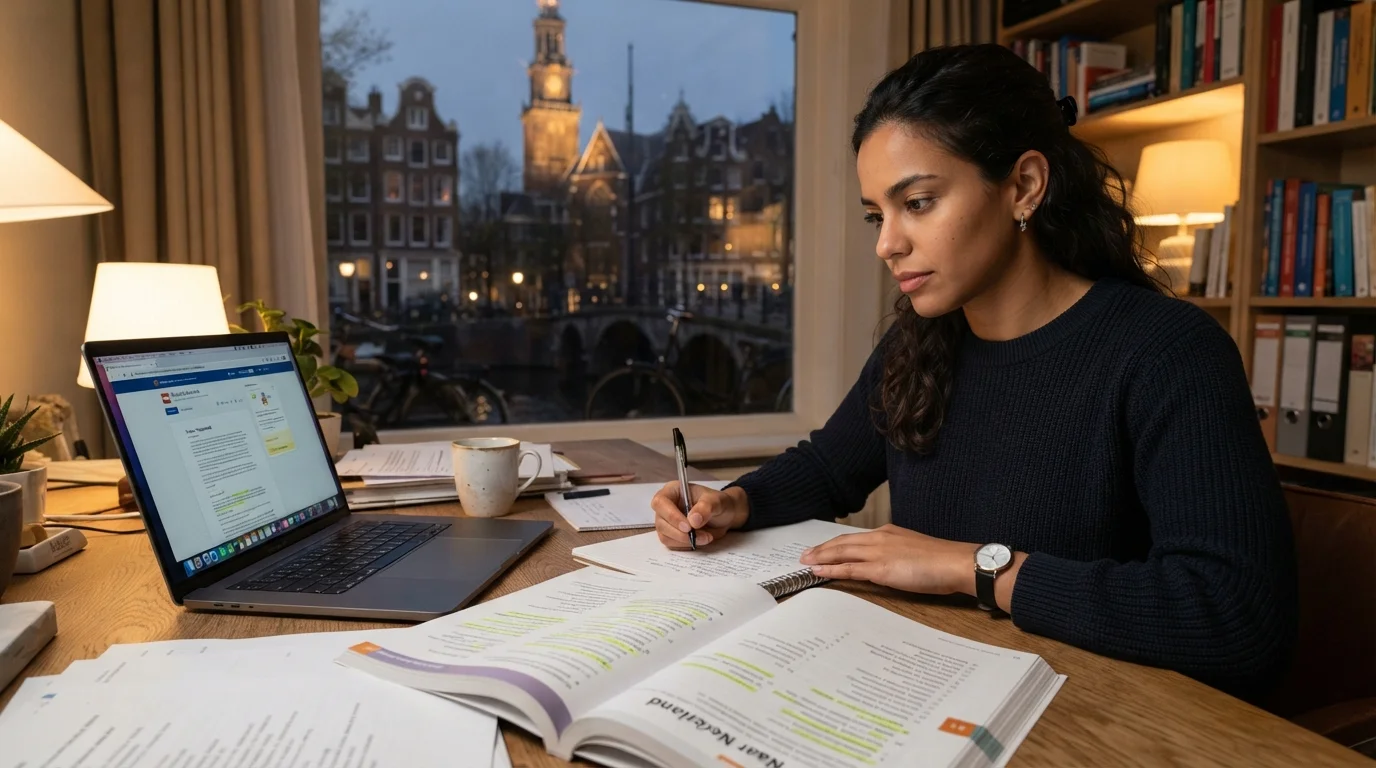
AI-generated image

Preparing for the Dutch civic integration exam (Inburgeringsexamen) can feel like a daunting task, especially under the newer B1 language requirements established by the Wet inburgering 2021. Among the four core language skills—reading, writing, speaking, and listening—the listening exam (Luistervaardigheid) often presents a unique challenge for non-native speakers. In real-life situations, native Dutch speakers speak fast, use colloquial expressions, and swallow vowels. The B1 listening test reflects these real-world conditions far more than the older, slower A2 level exams.
To pass the B1 listening test on your first attempt, completing realistic mock exams (oefenexamens) is the single most effective study strategy. Mock tests familiarize you with the computerized exam format, train your brain to filter out distracting audio information, and dramatically reduce test-day anxiety. In this comprehensive guide, we will break down the best official and unofficial mock exams for the Inburgering B1 Listening Test, explain how the listening section is evaluated, and share proven techniques to sharpen your ear for fast spoken Dutch.
Before diving into practice materials, it is crucial to understand what the Dienst Uitvoering Onderwijs (DUO) expects from you at the B1 level. Unlike the A2 exam, where speakers deliver clear, artificially slow monologues, the B1 test requires you to comprehend native-speed Dutch in various context-rich environments.
At the B1 level, you are expected to understand main points as well as specific detail in clear standard input on familiar matters regularly encountered in work, school, leisure, and public administration. Distractors—incorrect options that sound plausibly correct—are frequently included to test whether you truly comprehend context rather than just matching individual vocabulary words.
To build confidence and track your progress, you should utilize a variety of high-quality mock exam resources. Here are the top sources available for B1 listening practice.
The absolute gold standard for exam preparation comes directly from the source: the official Inburgeren.nl portal maintained by DUO. This is the only platform that uses the exact same software interface, audio style, and question structure as the actual test.
Why it is essential:
Pro Tip: Save at least two official DUO practice exams for the final two weeks of your preparation to conduct full-length timed dress rehearsals.
While official practice exams tell you what score you got, they do not provide personal guidance on how to fix your listening weaknesses. This is where modern AI tools excel. StroopTaal's custom exam preparation features bridge the gap between basic vocabulary drills and full-scale exam simulation. By offering personalized learning plans, StroopTaal allows you to practice with listening scenes and dictation, and to get instant feedback on your own pronunciation of tricky Dutch sounds.
Several major Dutch language publishers produce specialized coursebooks and digital platforms specifically designed for civic integration at the B1 level. Key recommendations include:
Relying solely on textbook listening tracks can make your hearing overly dependent on polished studio recordings. Real life—and the B1 exam—includes casual speech, light background noise, and natural pauses. Supplement your mock exams with these native sources:
Simply clicking through practice exams without a strategy will produce marginal gains. To maximize your score, follow this step-by-step approach when completing mock tests.
Whenever possible, skim the question stem and the multiple-choice options before pressing play on the audio segment. Doing so activates your background knowledge about the subject (e.g., calling a doctor's office or discussing a train delay) and helps your brain anticipate key words like numbers, dates, locations, or opinions.
During the first audio playback, focus on capturing the general context and main idea (hoofdlijn). Write down keywords on scratch paper. During the second playback, listen specifically for details that answer the question, such as specific reasons, emotions, or procedural steps.
The true learning happens after you finish the practice test. Review every question you missed and ask yourself:
If you are balancing your test prep with full-time work or family commitments, check out our guide on how to study for the Inburgering exam while working full-time to build an efficient daily routine.
Many candidates who perform well in reading or writing struggle during the B1 listening exam due to specific structural hurdles. Knowing these traps ahead of time gives you a distinct advantage.
Exam creators know that stressed test-takers look for matching words between the audio track and the multiple-choice options. A speaker might explicitly say the word listed in Choice A, but in a context that means the exact opposite. Always listen for the complete sentence context rather than matching standalone words.
In spoken Dutch, small words like wel, niet, geen, zou, mogen, or kunnen drastically change sentence meaning. For example, "We hadden het moeten doen" (We should have done it) implies that it was not done. Pay close attention to modal verbs and conditional phrasing.
In spoken B1 Dutch, words blur together. Phrasing like "Wat ga je doen?" often sounds like "Waggedoen?". Practicing with real-time feedback tools—like StroopTaal's interactive dialogue games and AI conversation tools—helps train your ear to parse connected speech patterns effortlessly.
Failing an exam section can be frustrating, but it is a temporary setback. If your results on Mijn Inburgering indicate that you fell short of the passing mark, do not panic. Analyze your test score diagnostic to see how close you were to the passing threshold, adjust your study plan to focus heavily on intensive listening drills, and book a retake once you consistently score above 75% on mock exams.
For detailed step-by-step guidance on administrative deadlines, retake fees, and strategy adjustments, read our full article on what to do if you fail the Inburgering exam.
Mastering the Inburgering B1 Listening Test requires consistency, targeted strategy, and access to quality mock exams. By pairing official DUO practice materials with smart digital study tools like StroopTaal, you can train your ear for authentic Dutch and build confidence for exam day.
Ready to level up your Dutch listening and vocabulary skills? Download StroopTaal today to unlock AI-powered personal learning plans, interactive dialogue scenarios, and gamified B1 preparation drills tailored to your schedule!
Share this article:
Taking the Inburgering B1 Speaking Exam (Spreekvaardigheid) is one of the most significant milestones in your Dutch integration journey. If your test...
Read moreIntroduction: Financing Your Dutch Language Journey in 2026 Moving to the Netherlands brings an exciting array of opportunities, from vibrant...
Read moreMoving to the Netherlands and building a career here is an exciting milestone. However, once the initial settling-in phase passes, many expats and...
Read more