Mastering Inversion in Dutch: When the Verb Comes First
Introduction: Why Dutch Inversion Matters If you\'re learning Dutch, one of the first grammar puzzles you\'ll face is inversion: when does the verb...
Read more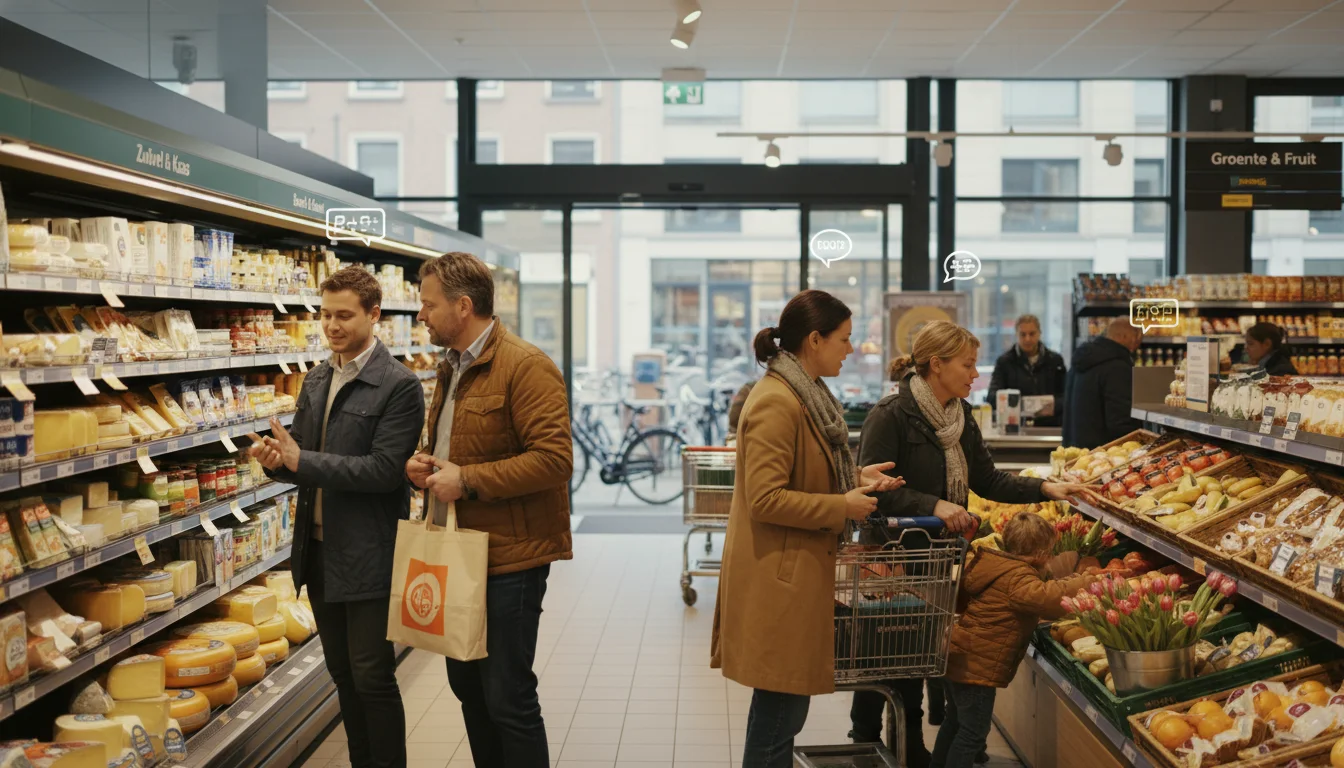
There’s a unique rite of passage for every expat or language learner in the Netherlands: the first solo trip to a Dutch supermarket. You walk into a gleaming Albert Heijn or a bustling Jumbo, basket in hand, feeling confident. Then, it hits you. The overwhelming choice of cheese, the mysterious deli counter ticket system, and the lightning-fast checkout staff speaking a language you’re still trying to grasp. Suddenly, a simple task feels like a final exam.
Don't worry, we’ve all been there. Grocery shopping is one of the most practical and recurring situations where you'll need to use your Dutch. Mastering a few key phrases won't just help you find the hagelslag (chocolate sprinkles for toast); it will make you feel more integrated, confident, and truly at home. This guide will walk you through 10 essential Dutch phrases and cultural tips to turn your grocery trips from stressful to successful.
A little preparation can make your shopping experience much smoother. Before we dive into the phrases, let's cover a few Dutch supermarket essentials.
You're inside, you have your bag, and your shopping list is ready. But where is the milk? And do they have gluten-free bread? Here are the phrases to ask for help without getting lost in translation.
Translation: Where can I find the...?
This is your go-to phrase for locating items. Supermarket staff (medewerkers) are usually busy but happy to point you in the right direction. Just insert the name of the product you're looking for.
Examples:
Pro Tip: Pay attention to the aisle numbers (pad 1, pad 2, etc.) as they might direct you by saying, "In pad vijf" (In aisle five).
Translation: Do you also have...?
This is useful when you're looking for a specific type of product, like a particular brand, an organic version, or a dietary alternative. While the verb 'heeft u' is formal, it's perfectly common and polite in this context. If you wanted to be less formal, you could say 'Hebben jullie ook...?'.
Examples:
When you're asking for something specific, you'll often be using adjectives. Getting the adjective endings right (like 'glutenvrij' vs. 'biologische') can be tricky. For a deeper dive, you might find it helpful to review the rules for mastering Dutch adjective endings.
The deli, cheese, or butcher counter can be intimidating. You often have to take a number (een nummertje trekken) and then place your order. Don't be shy; this is where you get the best products!
Translation: I would like... / May I have...?
Both are polite ways to start your order. "Ik wil graag" is direct and very common. "Mag ik van u" is slightly more formal but equally good. To be even more polite, you can use the conditional tense. Learning how to use 'zou' to make polite requests can be very useful here, for example: "Ik zou graag 200 gram kaas willen."
Examples:
Translation: 100 grams / 500 grams (a pound) / A kilo
This is crucial. The Dutch often order deli items using these specific measurements. While you can always use grams, using 'ons' and 'pond' will make you sound like a native.
Example:
"Mag ik een pond gehakt?" (May I have 500g of minced meat?)
Translation: A little more/less, please.
When the person serving you shows you the amount, they might ask, "Is dit goed zo?" (Is this okay?). If it's not quite right, you can use this phrase to adjust.
Example Dialogue:
Medewerker: "Een ons ham... 110 gram. Is dit goed zo?"
You: "Ja, prima. Dank u wel." (Yes, that's fine. Thank you.) OR "Mag het iets minder, alstublieft?" (Can it be a little less, please?)
Dutch checkout cashiers are known for their speed. Things move quickly, so it's good to be prepared for the rapid-fire questions that might come your way.
Translation: Do you want the receipt?
This is one of the most common questions. Your answer is simple:
Understanding when to use 'niet' versus 'geen' is a fundamental part of Dutch. For a full explanation, check out our guide on the Dutch negation rules.
Translation: Do you have a bonus card?
If you're at Albert Heijn, you'll hear this every time. Simply have your card or app ready to scan.
Translation: A bag with that?
If you forgot your reusable bag, they'll ask if you need to buy one. A simple 'Ja, graag' or 'Nee, dank u' will suffice.
Translation: Can I pay by card?
"Pinnen" specifically refers to paying with a debit card, which is the most common payment method in the Netherlands. While most major supermarkets like Albert Heijn and Jumbo now accept credit cards, it's not always guaranteed, especially at smaller shops or outdoor markets. Asking this question confirms you can use your card.
The answer will almost always be "Jazeker" (Yes, of course). You'll then be prompted to insert or tap your card.
Translation: Have a nice (rest of your) day! / Goodbye!
Politeness goes a long way. As you finish your transaction, the cashier will likely say one of these. It's great to be able to say it back!
Your response:
Practicing these short dialogues is a fantastic way to build confidence. In the StroopTaal app, you can use the AI conversation practice feature to simulate a trip to the supermarket. You can role-play being the customer, practice your pronunciation, and get comfortable with these phrases before you even leave the house.
Going grocery shopping (boodschappen doen) in the Netherlands is a fantastic opportunity to practice your Dutch in a real-world setting. It might seem daunting at first, but with these 10 essential phrases, you're well-equipped to handle everything from finding the kaas to navigating the kassa.
Remember, every trip is a chance to learn. Don't be afraid to make mistakes—the Dutch are generally very understanding and will appreciate your effort. Each successful interaction will build your confidence for the next one.
Ready to take your Dutch to the next level? Download the StroopTaal app and start practicing with our interactive dialogue games and AI-powered conversation tools. Turn your next trip to Albert Heijn or Jumbo into a fun language-learning adventure. Fijne dag en veel succes!
Share this article:
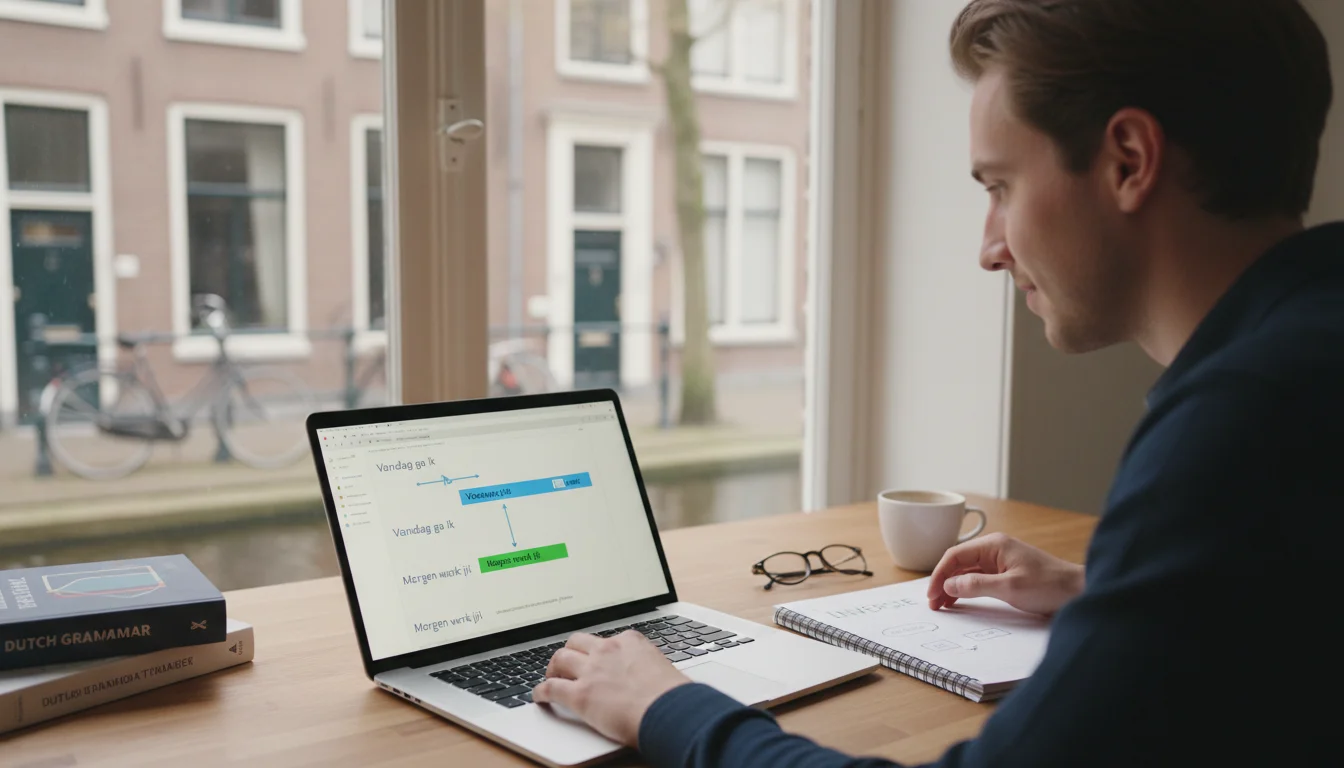
Introduction: Why Dutch Inversion Matters If you\'re learning Dutch, one of the first grammar puzzles you\'ll face is inversion: when does the verb...
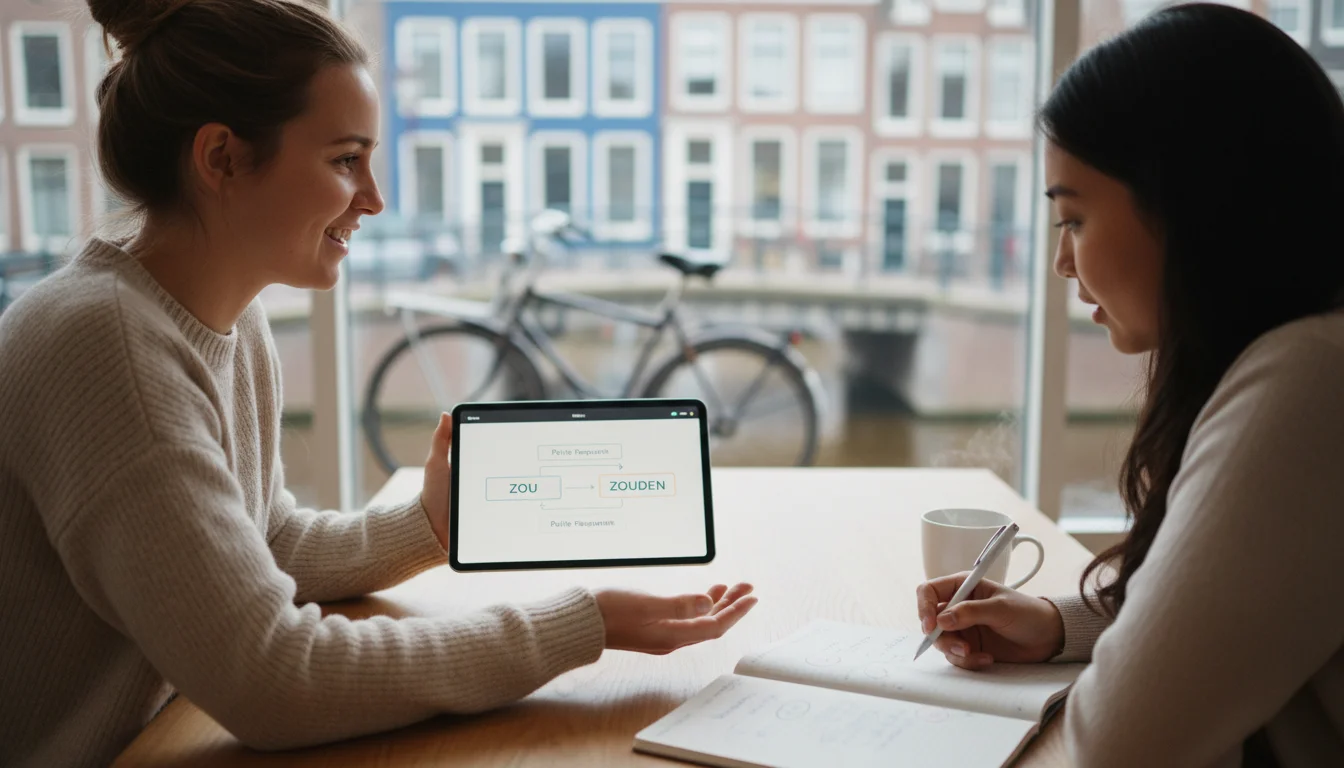
Read moreThe Secret to Sounding Polite in Dutch: Unlocking 'Zou' and 'Zouden' Picture this: you're in a charming Dutch bakery, eyeing a delicious-looking...
Read moreThe Dutch Past Tense Puzzle: Perfectum or Imperfectum? Picture this: you're telling a Dutch friend about your weekend. You say, "Zaterdag, ik werkte...
Read more